Blog
The Strategic Evolution of Polyetherimide (PEI) in Semiconductor Miniaturization and Next-Generation Connectivity

Subject: High-Performance Polymers / Material Science
Focus: Semiconductor Test Sockets and 5G/6G High-Frequency Substrates
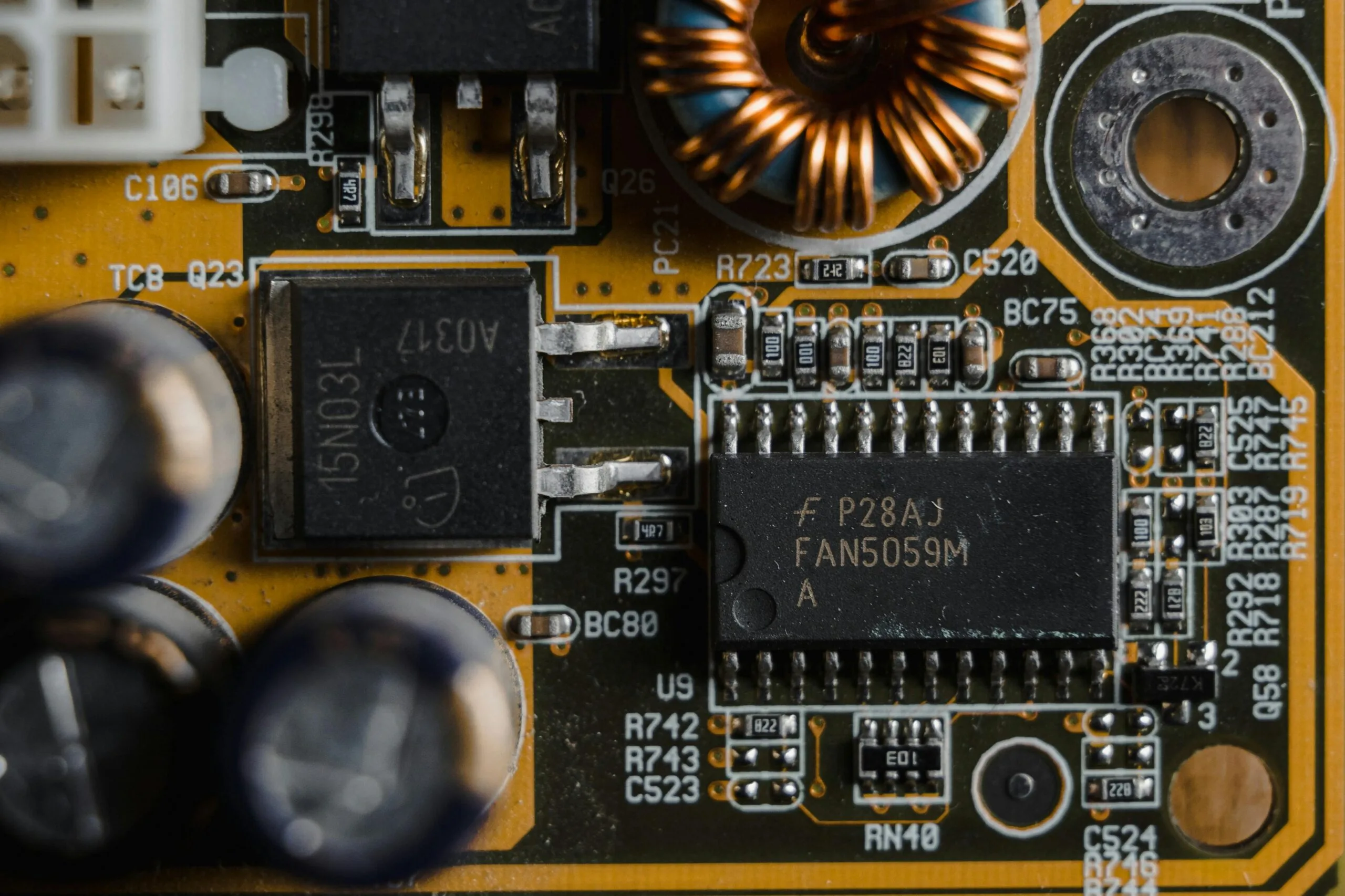
As the global electronics industry migrates toward the 2nm semiconductor node and begins the transition from 5G-Advanced to 6G telecommunications, the demand for “Super Engineering Plastics” has reached a critical inflection point. Polyetherimide (PEI), an amorphous high-performance thermoplastic, has emerged as the definitive material of choice. This report examines the dual-role of PEI in facilitating the miniaturization of semiconductor test infrastructure and ensuring signal integrity in ultra-high-frequency (mmWave and Sub-THz) environments.
- Semiconductor Testing: The Challenge of Micro-Scale Precision
The semiconductor industry’s relentless pursuit of Moore’s Law has led to extreme chip density, necessitating a paradigm shift in testing hardware. IC test sockets—the interface between the chip and the automated test equipment (ATE)—now require unprecedented dimensional stability.
A. Dimensional Stability and Micro-Machining
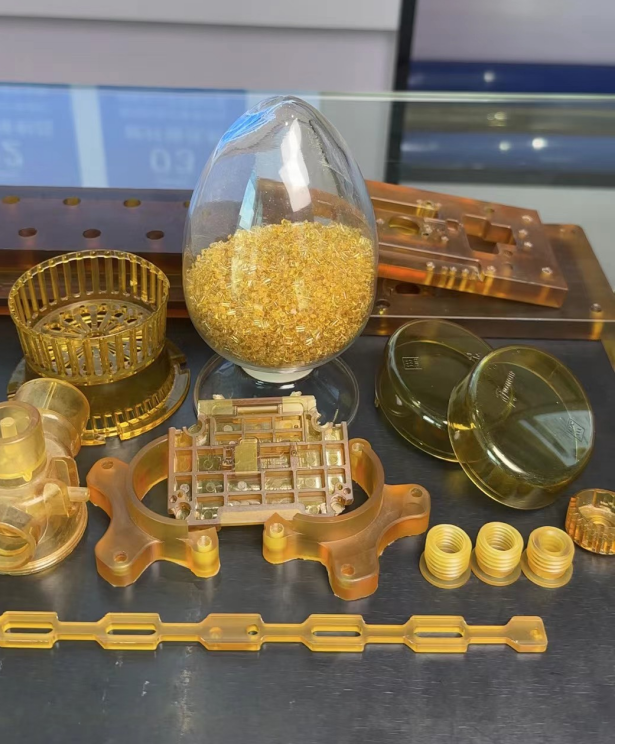
With pin pitches shrinking below 0.2mm, traditional engineering plastics often fail due to structural deformation. PEI (specifically glass-filled and mineral-filled grades) offers a low Coefficient of Thermal Expansion (CTE) and high stiffness. This allows for the high-precision CNC micro-drilling of thousands of microscopic holes in a single socket plate without the risk of burring or stress cracking.
B. Thermal Resilience
Burn-in and functional testing often occur at temperatures exceeding 150°C. PEI’s high Glass Transition Temperature of approximately 217°C ensures that test sockets maintain their mechanical integrity and planarity under repeated thermal cycling, preventing “contact miss” errors that could compromise yield data.
- 5G/6G Infrastructure: Redefining Dielectric Performance
As wireless communication moves toward 6G, frequencies are shifting into the millimeter-wave (mmWave) and terahertz (THz) spectrums. At these levels, signal attenuation (loss) becomes the primary engineering obstacle.
A. Low-Loss Dielectric Properties
PEI is distinguished by its remarkably stable Dielectric Constant and Dissipation Factor
across a wide range of frequencies and temperatures.
The 5G/6G Advantage: PEI provides a
(Loss Tangent) that remains low and consistent even as frequencies scale upward. This is critical for 6G base stations and phase-array antennas, where maintaining signal strength is vital for high-speed data transmission.
B. Moisture Resistance and Signal Integrity
Unlike many polyamides (Nylons), PEI exhibits extremely low moisture absorption. In outdoor 5G/6G infrastructure deployment, environmental humidity can fluctuate
values in porous materials, leading to signal drift. PEI’s inherent hydrophobicity ensures that RF (Radio Frequency) performance remains predictable in diverse climatic conditions.
3. Comparative Material Analysis: Why PEI?
In the hierarchy of high-performance polymers, PEI occupies a unique “Sweet Spot” between PEEK and traditional engineering plastics:
- PEI vs. PEEK: While PEEK offers higher chemical resistance, PEI’s amorphous nature provides superior dimensional stability and transparency (if required), often at a more optimized cost-to-performance ratio for electronic housing and socketry.
- PEI vs. LCP (Liquid Crystal Polymer): While LCP is excellent for thin-wall injection molding, PEI offers better isotropic mechanical properties, meaning it performs uniformly in all directions—a necessity for complex, multi-axial CNC machined parts.
- Future Outlook: Sustainability and Advanced Grades
The 2025-2026 roadmap for PEI includes the integration of bio-certified circular resins (e.g., Sabic’s TRUCIRCLE™ initiative), allowing manufacturers to meet ESG (Environmental, Social, and Governance) targets without sacrificing the stringent mechanical properties required for semiconductor and aerospace applications.
Furthermore, new Low-Dk PEI grades are currently being trialed for 6G hardware, aiming to push the boundaries of dissipation factors even lower , effectively closing the gap with PTFE while maintaining the structural rigidity of a high-performance thermoplastic.
Conclusion
Polyetherimide is no longer just a structural component; it is a functional enabler of modern computing and communication. As the industry faces the dual challenges of micro-miniaturization and high-frequency signal management, PEI’s unique combination of thermal stability, dielectric consistency, and machining precision positions it as the foundational substrate for the next decade of technological advancement.