
Blog
The Cornerstone of Lightweighting and High Safety: Deep Applications of Polyphenylene Sulfide (PPS) in the New Energy Vehicle Industry

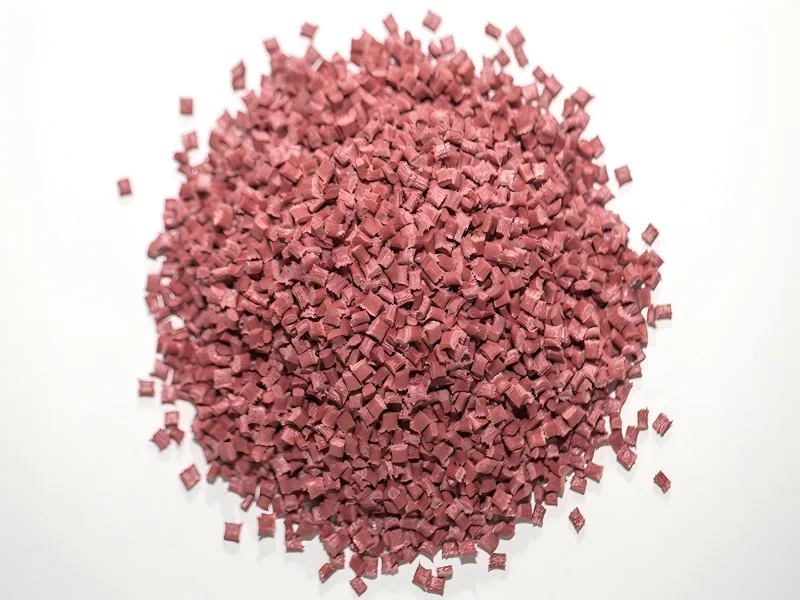
In the surging wave of the new energy vehicle (NEV) industry, material innovation has become the core driving force pushing through technological bottlenecks. As the industry shifts from traditional “horsepower competition” to “efficiency and safety competition,” a special engineering plastic known as Polyphenylene Sulfide (PPS) is quietly becoming the “darling” of automakers. Data shows that while a traditional internal combustion engine vehicle uses about 700 grams of PPS, the usage in an NEV directly surges to over 2,500 grams—a more than threefold increase. Dubbed the “sixth largest engineering plastic,” this material, with its exceptional properties including high-temperature resistance, electrical insulation, chemical corrosion resistance, and inherent flame retardancy, is spearheading a silent revolution of “replacing steel with plastic” across the “Three Electric” systems (battery, motor, and electronic control) of NEVs.
1. Power Battery System: The Guardian of Safety and Integration
The power battery is the heart of an NEV and the highest priority for safety requirements. The application of PPS in this field is extensive and deep, primarily benefiting from its outstanding thermal stability and insulation properties.
- Structural Support in Battery Modules: PPS sheets are widely used to manufacture brackets, connectors, and side plates. Because batteries generate vast amounts of heat during charging and discharging—with temperatures soaring under high-load conditions—ordinary plastics cannot cope. PPS can maintain its structural integrity over the long term in environments of 200°C or even higher. Furthermore, its low moisture absorption rate (only around 0.03%) ensures dimensional stability in hot and humid environments, preventing changes in internal stress within the battery pack caused by water-induced swelling.
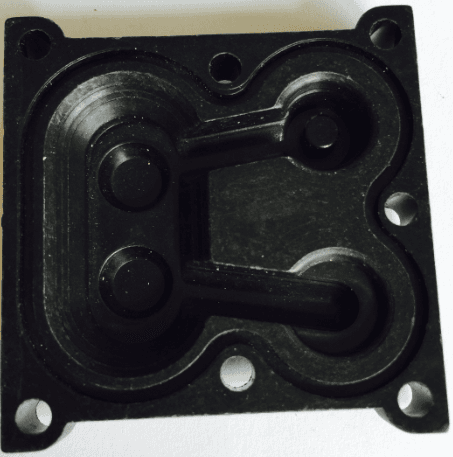
- Core Sealing and Insulation: PPS is indispensable in the critical sealing and insulation components of battery packs. For instance, negative insulation sheets, positive and negative insulation pillar gaskets, and sealing rings within battery cover plates are commonly injection-molded using PPS. In particular, insulation-grade PPS resins modified with glass fibers and calcium carbonate can boost insulation resistance to over 2,000 MΩ, far exceeding standard requirements and effectively minimizing failure risks caused by fluctuations in insulation resistance.
- Cylindrical Battery PACKs (e.g., 21700): Due to its excellent resistance to battery electrolytes and superior bonding performance with aluminum and copper terminal pillars, PPS has become the premier choice for sealing rings. Utilizing nano-injection molding (NMT) technology, it achieves metal-to-plastic integration, simplifying the structure and shedding weight.
2. Drive Motor System: The Pioneer of High-Temperature Resistance and Creep Resistance
As the core of power output, the drive motor operates in extremely harsh internal environments. It must endure not only the mechanical stress brought by high-speed rotation but also severe high temperatures and electromagnetic interference. Here, PPS is primarily utilized in the precision injection molding of electronic components.
- Electrical Connectivity: PPS is used to manufacture internal connectors, three-phase copper busbar pillars, and high-voltage wiring terminals. These components must withstand voltage platforms of 800V or even higher. With a volume resistivity as high as 1016 Ω⋅cm and a Comparative Tracking Index (CTI) reaching over 600V, PPS effectively prevents arcing and short circuits, safeguarding the high-voltage system.
- Thermal and Dimensional Stability: The heat generated during motor operation can cause regular plastics to soften and deform. In contrast, PPS maintains its mechanical strength even at 260°C. Its low mold shrinkage rate (0.2%–0.5%) guarantees micron-level dimensional tolerances, ensuring assembly precision under thermal expansion and contraction cycles.
- Oil-Cooled Motors: For components like resolvers and insulated coil bobbins, the wear resistance and dielectric strength of PPS ensure long-term operational precision. Especially in oil-cooled motors, modified PPS materials (such as PPS + 30% GF) demonstrate exceptional oil resistance, fatigue resistance, and high strength, making them ideal metal replacements that significantly reduce overall motor weigh
The electronic control system—comprising the Vehicle Control Unit (VCU), Motor Control Unit (MCU), DC-DC converter, and Battery Management System (BMS)—serves as the brain of an NEV, integrating a massive array of precision electronic components. As chip processing power increases and power density rises, heat dissipation has become increasingly severe, posing an extreme challenge to the thermal and insulation limits of materials.
3. Electronic Control System: The Hub of Thermal Management and Electrical Insulation
- Structural Enclosures and Supports: In electronic control units, PPS sheets are extensively applied in BMS enclosures, controller insulation brackets, and high-voltage connector bases. Its excellent heat deflection temperature (typically exceeding 260°C) and self-extinguishing rating (UL94 V-0) ensure that even under extreme thermal runaway scenarios, it effectively blocks flame propagation and protects surrounding components.
- IGBT Modules (Insulated Gate Bipolar Transistors): As the core power semiconductor device of the electronic control system, IGBT modules utilize injection-molded PPS for housings and insulation components due to the material’s high fluidity and high CTI value. Under thermal shock cycles ranging from -40°C to 150°C, modified PPS (such as 40% glass fiber reinforced) remains crack-free and retains exceptionally high strength, satisfying the rigorous, long-term reliability standards for automotive-grade components.
- Thermal Barriers: In insulation plates between charging interfaces and motor housings, PPS sheets not only provide necessary thermal barriers but also support CNC precision machining due to their excellent processability, meeting the requirements for complex structural parts.
4. Thermal Management and Fluid Systems: The Fusion of Hydrolysis Resistance and Lightweighting
The thermal management system of an NEV is far more complex than that of a traditional internal combustion engine car, involving multiple circuits such as battery cooling, motor cooling, and air conditioning systems. PPS applications in this domain are primarily reflected in electronic water pump housings, oil pump end covers, and accessories for heat exchange equipment.