

Blog
PEEK Composite Materials: Types, Properties, and Applications

Introduction
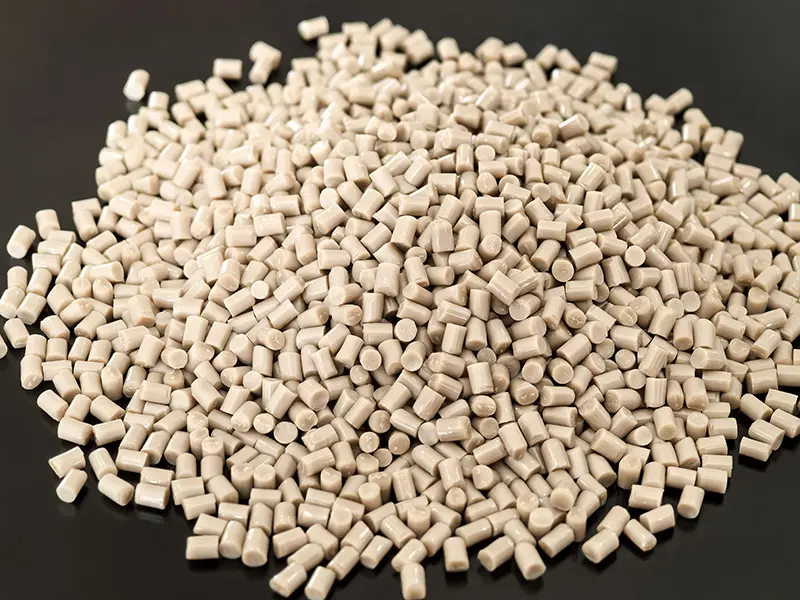
Polyetheretherketone (PEEK) is a high-performance engineering thermoplastic known for its excellent mechanical strength, chemical resistance, thermal stability, and wear resistance. Due to its outstanding properties, PEEK materials are widely used in demanding industries including aerospace, semiconductor, medical, automotive, oil & gas, and industrial equipment.
However, some applications require higher performance than standard virgin PEEK can provide. To meet these challenging requirements, PEEK can be modified by adding reinforcing fibers and functional fillers, creating a range of advanced PEEK composite materials.
PEEK composite materials are designed to improve specific properties such as strength, stiffness, wear resistance, friction performance, and dimensional stability. By selecting the right reinforcement system, engineers can achieve optimized performance for different operating environments.
What Are PEEK Composite Materials?
PEEK composite materials are modified forms of standard PEEK resin that contain reinforcing fibers or functional additives.
During the compounding process, different fillers are added into the PEEK matrix to enhance certain characteristics. The resulting composite materials maintain the excellent properties of PEEK while providing improved performance for specialized applications.
Common reinforcement and filler materials include:
- Carbon fiber
- Glass fiber
- PTFE
- Graphite
- Carbon powder
- Ceramic fillers
Each type of filler provides different advantages depending on the application requirements.
For example:
- Carbon fiber improves mechanical strength and wear resistance.
- Glass fiber improves stiffness and dimensional stability.
- PTFE reduces friction and improves sliding performance.
- Graphite enhances wear resistance and self-lubricating properties.
Why Choose Reinforced PEEK Materials?
Virgin PEEK already offers excellent overall performance, including:
- Continuous operating temperature up to 260°C
- Excellent chemical resistance
- Low moisture absorption
- High mechanical strength
- Good fatigue resistance
- Excellent dimensional stability
However, in extreme applications involving heavy loads, continuous friction, or high-temperature operation, additional modifications may be required.
PEEK composite materials provide several advantages:
Improved Mechanical Strength
Fiber reinforcement increases the tensile strength and stiffness of PEEK, allowing components to withstand higher mechanical loads and reduce deformation during operation.
Enhanced Wear Resistance
For applications involving friction and movement, reinforced PEEK grades can significantly improve wear resistance and extend component service life.
Better Dimensional Stability
Glass fiber and carbon fiber reinforcement reduce thermal expansion and improve dimensional accuracy, especially under high-temperature conditions.
Reduced Friction Performance
PTFE and graphite-filled PEEK grades provide lower friction coefficients and improved dry-running performance for sliding applications.
Main Types of PEEK Composite Materials
Carbon Fiber Reinforced PEEK (CF/PEEK)
Carbon fiber reinforced PEEK is one of the most commonly used PEEK composite materials for high-performance applications.
Typical grades include:
- PEEK CF15
- PEEK CF30
The addition of carbon fibers improves:
- Tensile strength
- Elastic modulus
- Creep resistance
- Wear resistance
- Thermal conductivity
- Dimensional stability
Compared with virgin PEEK, carbon fiber reinforced PEEK provides higher load-bearing capability and better resistance to deformation.
Advantages of Carbon Fiber Reinforced PEEK
- Excellent mechanical strength
- Superior wear resistance
- Lower thermal expansion
- Improved fatigue performance
- Suitable for high-load applications
Typical Applications
Carbon fiber PEEK is widely used for:
- Bearings
- Bushings
- Wear rings
- Sealing components
- Pump parts
- Aerospace components
- Semiconductor equipment
Glass Fiber Reinforced PEEK (GF/PEEK)
Glass fiber reinforced PEEK is designed to provide improved stiffness, strength, and dimensional stability.
The most common grade is:
- PEEK GF30
Glass fiber reinforcement helps improve:
- Rigidity
- Compression strength
- Creep resistance
- Dimensional accuracy
Compared with carbon fiber reinforced PEEK, glass fiber PEEK provides better electrical insulation properties, making it suitable for electrical and industrial applications.
Advantages of Glass Fiber Reinforced PEEK
- High stiffness
- Excellent dimensional stability
- Good electrical insulation
- Improved mechanical performance
Typical Applications
GF PEEK is commonly used in:
- Electrical components
- Valve parts
- Pump components
- Structural parts
- Industrial machinery
PTFE Filled PEEK
PTFE filled PEEK is a modified grade developed for applications requiring low friction and excellent sliding performance.
PTFE additives improve:
- Friction reduction
- Wear resistance
- Dry-running capability
- Sliding performance
This type of PEEK composite material is commonly used in components where lubrication is limited or unavailable.
Typical Applications
- Bearings
- Guide rings
- Seals
- Wear plates
- Sliding components
Graphite Filled PEEK
Graphite filled PEEK provides excellent wear resistance and self-lubricating properties.
Graphite additives help improve:
- Friction performance
- Thermal conductivity
- Long-term wear resistance
This makes graphite filled PEEK suitable for high-temperature friction applications.
Typical Applications
- High-temperature bearings
- Wear-resistant components
- Dry-running mechanical parts
Ceramic Filled PEEK
Ceramic filled PEEK incorporates ceramic particles to further improve hardness, abrasion resistance, and thermal performance.
This type of composite material is suitable for demanding applications where extreme wear resistance is required.
Typical applications include:
- Precision mechanical components
- High-temperature wear parts
- Abrasion-resistant components
Comparison of Different PEEK Composite Materials
| Material Type | Main Advantage | Typical Applications |
|---|---|---|
| Virgin PEEK | Balanced overall performance | General engineering components |
| Carbon Fiber PEEK | High strength and wear resistance | Bearings, bushings, structural parts |
| Glass Fiber PEEK | High stiffness and dimensional stability | Electrical and industrial parts |
| PTFE Filled PEEK | Low friction performance | Sliding components and seals |
| Graphite Filled PEEK | Wear resistance and lubrication | High-temperature friction parts |
| Ceramic Filled PEEK | Excellent abrasion resistance | Extreme wear applications |
Applications of PEEK Composite Materials
Aerospace Industry
PEEK composites are widely used in aerospace applications due to their lightweight properties, high strength, and excellent resistance to temperature and chemicals.
Common applications include:
- Structural components
- Sealing parts
- Lightweight replacement components
Semiconductor Industry
The semiconductor industry requires materials with high purity, chemical resistance, and dimensional stability.
PEEK composite materials are used for:
- Wafer handling components
- Semiconductor fixtures
- Insulating parts
- Precision components
Medical Industry
PEEK materials are widely used in medical applications because of their biocompatibility, sterilization resistance, and mechanical performance.
Applications include:
- Surgical instruments
- Medical devices
- Precision components
Oil & Gas Industry
PEEK composites perform well in harsh environments requiring high temperature resistance, chemical resistance, and wear durability.
Applications include:
- Sealing components
- Valve parts
- Wear rings
- Pump components
Automotive Industry
PEEK composite materials help reduce weight while maintaining excellent mechanical performance.
Applications include:
- Transmission components
- Sensor parts
- Engine-related components
How to Select the Right PEEK Composite Material?
Selecting the correct PEEK composite grade depends on the actual working conditions.
High Load Applications
Recommended material:
Carbon Fiber Reinforced PEEK
Suitable for:
- High mechanical stress
- Heavy load components
- Wear-resistant parts
Electrical Applications
Recommended material:
Glass Fiber Reinforced PEEK
Suitable for:
- Insulating components
- Electrical equipment
- Precision parts
Sliding and Wear Applications
Recommended materials:
PTFE Filled PEEK or Graphite Filled PEEK
Suitable for:
- Bearings
- Bushings
- Sealing components
- Dry-running applications
Conclusion
PEEK composite materials provide engineers with a wider range of performance options compared with standard PEEK.
By adding different reinforcement fibers and functional fillers, PEEK can be customized for specific requirements such as higher strength, improved wear resistance, lower friction, and better dimensional stability.
Understanding the differences between carbon fiber PEEK, glass fiber PEEK, PTFE filled PEEK, and other modified grades helps engineers select the most suitable material for their applications.
PEEK composite materials continue to play an important role in advanced engineering applications where traditional plastics and metals cannot meet performance requirements.