

Blog
PEEK Medical Parts Machining: Materials, Processes, Applications and Manufacturing Challenges

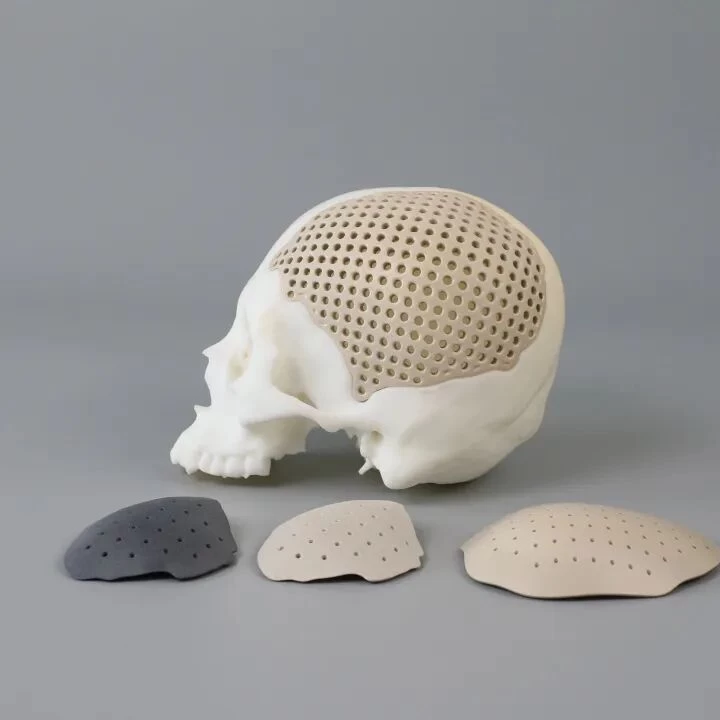
Introduction
Polyetheretherketone (PEEK) has become one of the most important high-performance polymers used in the medical industry. Due to its excellent biocompatibility, chemical resistance, mechanical strength, and sterilization resistance, PEEK is widely used for medical implants, surgical instruments, and precision medical components.
Compared with traditional metal materials, PEEK offers several unique advantages, including lightweight properties, radiolucency under X-ray imaging, and a mechanical modulus closer to human bone.
However, producing medical PEEK components is not as simple as machining ordinary plastic materials. The combination of high performance, dimensional requirements, and strict cleanliness requirements makes PEEK machining a specialized manufacturing process.
Successful medical PEEK parts machining requires proper material selection, precision CNC machining technology, process control, and strict inspection procedures.
Why Is PEEK Used for Medical Components?
PEEK is widely selected for medical applications because it provides an excellent balance of mechanical performance and biological compatibility.
Excellent Biocompatibility
Medical-grade PEEK has excellent compatibility with the human body and is suitable for applications requiring long-term contact with biological tissues.
Lightweight Alternative to Metal
Compared with stainless steel and titanium, PEEK has a much lower density, helping reduce overall component weight.
Radiolucent Properties
Unlike metals, PEEK does not interfere with X-ray imaging, allowing doctors to clearly observe surrounding tissues and implant conditions.
Chemical and Sterilization Resistance
PEEK maintains its properties when exposed to:
- Cleaning chemicals
- High-temperature sterilization
- Repeated autoclave cycles
Mechanical Performance
PEEK provides:
- High strength
- Excellent fatigue resistance
- Good creep resistance
- Dimensional stability
These characteristics make it suitable for demanding medical applications.
Common Medical PEEK Materials
Different PEEK grades are selected depending on the application requirements.
Medical Grade Virgin PEEK
Unfilled medical-grade PEEK is commonly used where excellent purity, biocompatibility, and chemical resistance are required.
Typical applications:
- Surgical instruments
- Medical device housings
- Implant components
Carbon Fiber Reinforced PEEK (CF PEEK)
Carbon fiber reinforced PEEK provides higher strength and stiffness compared with standard PEEK.
Advantages:
- Improved mechanical strength
- Higher load-bearing capability
- Better dimensional stability
Applications:
- Structural medical components
- Orthopedic devices
- High-strength medical parts
Glass Fiber Reinforced PEEK (GF PEEK)
Glass fiber reinforced PEEK improves stiffness and dimensional stability.
Applications:
- Medical equipment components
- Structural supports
- Precision components
Common Medical PEEK Parts Produced by CNC Machining
CNC machining is widely used for medical PEEK components because it allows complex geometries, low-volume production, and high precision.
Typical machined medical PEEK parts include:
Spinal Fusion Cages
PEEK spinal cages are widely used in orthopedic surgery because their mechanical properties are closer to human bone compared with metal implants.
Advantages:
- Lightweight
- Radiolucent
- Biocompatible
Surgical Instrument Components
PEEK is used for:
- Surgical tool handles
- Insulating components
- Precision medical fixtures
Its excellent chemical resistance allows repeated sterilization.
Medical Device Components
Machined PEEK parts are commonly found in:
- Diagnostic equipment
- Medical instruments
- Laboratory devices
Implantable Components
PEEK can be machined into precision implant components requiring:
- High dimensional accuracy
- Excellent surface quality
- Long-term stability
Why Is Medical PEEK Machining Difficult?
Although PEEK is a high-performance plastic, machining it requires specialized knowledge.
1. Thermal Control During Machining
PEEK has relatively low thermal conductivity compared with metals.
During CNC machining, heat generated during cutting can accumulate around the machining area.
Excessive heat may cause:
- Dimensional changes
- Surface defects
- Poor accuracy
Professional machining requires optimized cutting parameters and proper cooling methods.
2. Dimensional Stability Control
PEEK has lower stiffness than metals, which means thin-wall or complex parts may deform during machining.
Common challenges include:
- Clamping deformation
- Elastic recovery
- Dimensional deviation after machining
To solve these issues, experienced manufacturers use:
- Proper fixture designs
- Controlled machining processes
- Stress-relieved PEEK stock materials
3. Tool Selection
PEEK requires carefully selected cutting tools.
Compared with standard plastics, PEEK can cause faster tool wear, especially reinforced grades containing:
- Carbon fiber
- Glass fiber
Professional machining often uses:
- Carbide tools
- Diamond-coated tools
- PCD tooling for demanding applications
4. Material Cleanliness Control
For medical PEEK parts, material management is extremely important.
Manufacturers should control:
- Raw material source
- Material certificates
- Storage conditions
- Processing environment
For implant-related applications, contamination control becomes especially critical.
CNC Machining Processes for Medical PEEK Parts
Medical PEEK components are commonly produced using:
CNC Milling
Suitable for:
- Complex geometries
- Multi-surface components
- Precision medical parts
CNC Turning
Suitable for:
- Cylindrical components
- Bushings
- Rings
- Tubular parts
5-Axis Machining
Used for:
- Complex medical structures
- Orthopedic components
- Parts requiring multiple angled surfaces
5-axis machining can reduce repositioning errors and improve dimensional consistency.
Quality Control for Medical PEEK Components
Medical applications require strict inspection and quality control.
Important inspection procedures include:
Dimensional Inspection
Using:
- Coordinate Measuring Machines (CMM)
- Precision measurement equipment
Surface Quality Inspection
Ensuring:
- Smooth surfaces
- No machining defects
- Proper finishing quality
Material Verification
Professional suppliers should provide:
- Material certificates
- Grade confirmation
- Traceability documentation
Cleanliness Inspection
For sensitive medical applications, contamination control is essential before delivery.
How to Choose a Medical PEEK Machining Manufacturer?
When selecting a supplier, consider the following factors:
Experience With Medical PEEK
Ask whether the manufacturer has previous experience producing medical PEEK components.
Material Control System
A reliable supplier should clearly identify:
- PEEK grade
- Material supplier
- Certification documents
Machining Capability
Evaluate:
- CNC equipment
- Precision capability
- Complex part experience
Quality Management
Check whether the supplier has:
- Inspection procedures
- Traceability system
- Quality documentation
Conclusion
PEEK medical parts machining requires much more than basic CNC machining capability.
Due to its unique material characteristics, medical PEEK components require professional knowledge in:
- Material selection
- Machining processes
- Thermal control
- Dimensional stability
- Quality inspection
With proper manufacturing technology and strict process control, PEEK can provide reliable solutions for advanced medical applications including implants, surgical instruments, and precision medical devices.
As demand for lightweight, durable, and biocompatible materials continues to grow, PEEK remains one of the most valuable polymers for next-generation medical components.