
Blog
Sourcing Guide: How to Select an Injection Molder for PEEK, PAI, PEI, and Ultra-High-Performance Polymers

1. The Performance Gap: When Material Data Sheets Lie
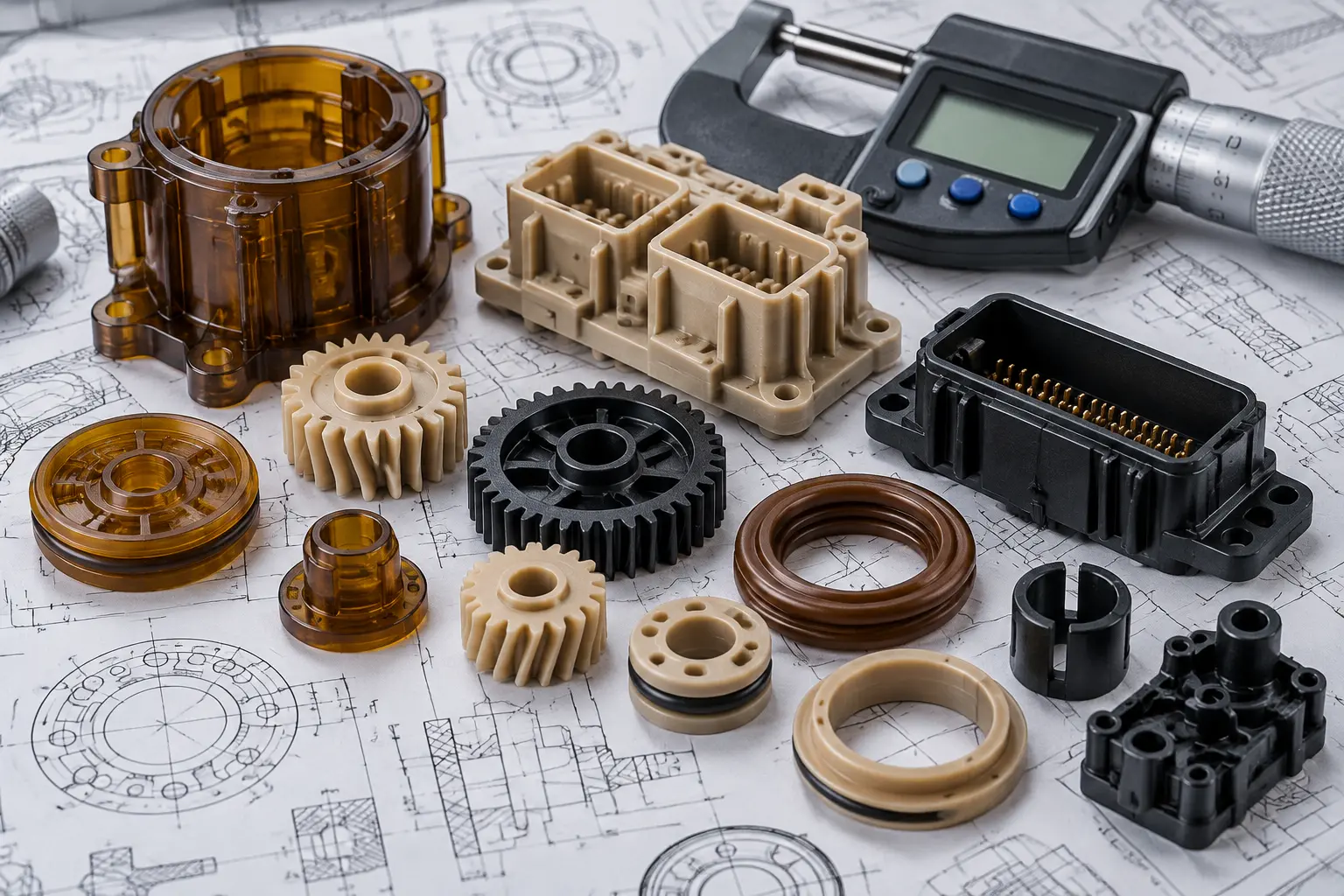
In extreme operating environments—such as cryogenic exploration, downhole oil extraction, high-frequency semiconductor test sockets, or corrosive chemical processing—ultra-high-performance polymers routinely outperform industrial alloys. High-modulus materials such as Polyamide-imide (PAI), Polyether ether ketone (PEEK), Polyetherimide (PEI), and Polyphenylene sulfide (PPS) provide unmatched strength-to-weight ratios, chemical resistance, and thermal endurance.
However, raw resin property sheets only reflect theoretical maximums.
Between virgin resin pellets and a mission-critical component lies a narrow, intolerant processing window. Without rigorous scientific injection controls, these premium materials suffer thermal degradation, molecular fragmentation, internal voids, and high residual stresses. Choosing an injection molding vendor for advanced thermoplastics is not a standard sourcing exercise; it is an audit of technical discipline and equipment capability.
2. Process Vulnerabilities: Why Advanced Thermoplastics Defy Standard Molding
Standard engineering plastics (such as nylon, polycarbonate, or acetal) tolerate broad temperature variances. Advanced ultra-polymers operate under far more punishing constraints:
- Extremely Narrow Melt Windows: The threshold between optimal melt viscosity and rapid polymer degradation can be less than 10°C. If barrel residence time exceeds strict limits, the polymer chain breaks down, drastically reducing mechanical strength and impact resistance. Proper press sizing is vital: an oversized barrel leads to degradation, while an undersized barrel fails to achieve complete, uniform melting.
- Highly Loaded Formulations: Structural and wear grades frequently integrate carbon fibers, glass reinforcements, solid lubricants (such as PTFE or graphite), or specialized electrostatic dissipation additives. Each formulation alters melt rheology, thermal conductivity, and volumetric shrinkage, requiring tailored processing parameters.
- Viscosity and Clamp Dynamics: Processing at temperatures exceeding 350°C (660°F) demands extreme hydraulic or electric clamping stability to maintain parting-line seal integrity without inducing flash or localized stresses.
3. The 5-Pillar Vendor Technical Audit
To ensure finished components meet design-intent properties, procurement and engineering teams should evaluate prospective molders using the following criteria:
High-spec machinery is useless without qualified processing engineers.
- Formal Scientific Molding Qualifications: The molder’s engineering staff must hold verified certifications in decoupled/scientific molding methodologies. They must be capable of establishing data-driven process windows based on cavity pressure transducers and in-mold monitoring rather than operator guesswork.
- Material-Specific Processing History: Look for documented experience with specific resin chemistries, particularly PAI and highly filled PEEK. A demonstrable track record with high-reliability clients in aerospace, medical device, and semiconductor sectors provides verifiable proof of capability.
Conventional shop floors lack the process cleanliness and thermal control needed for ultra-polymers.
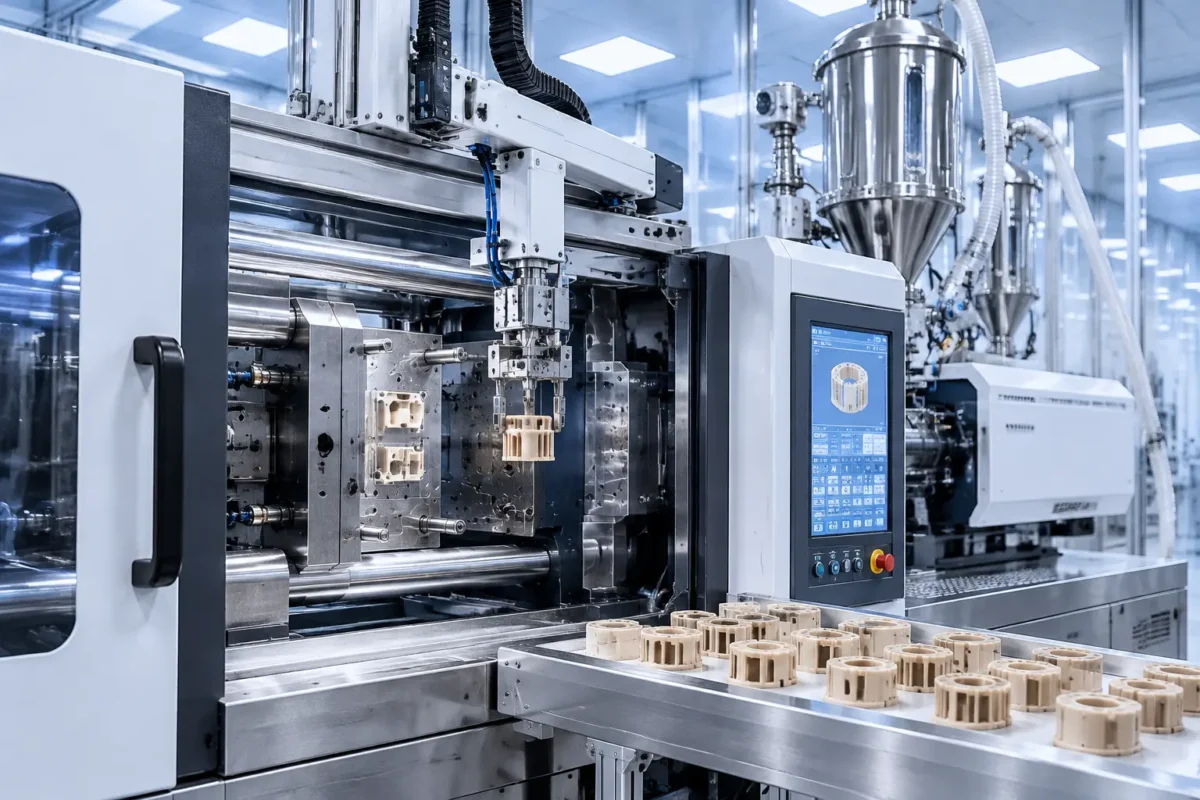
- All-Electric Presses & Injection-Compression: Electric injection units provide superior shot-to-shot repeatability, position control, and velocity management. When molding thick cross-sections, injection-compression capability is critical to eliminate internal vacuum voids and maintain density.
- Dedicated Closed-Loop Desiccant Dryers: Ultra-polymers are highly sensitive to moisture. Incomplete drying causes hydrolytic degradation during processing. Molders should utilize dedicated drying units to prevent cross-contamination from incompatible resins.
- Mandatory Mechanical Tear-Downs (No Chemical Purging): Purging compounds often have lower melt points than ultra-polymers and cannot fully remove high-temperature residues. Unmelted, charred plastic left in the barrel will slough off in subsequent production runs, creating microscopic inclusions that act as fatigue-failure points. Reliable molders mandate a complete physical tear-down and manual cleanout of screws, barrels, and nozzles between runs.
Maximum physical properties often require processing after the part is ejected from the tool:
- PAI Post-Curing: Molded PAI requires an extended, ramped thermal post-cure cycle spanning several days to complete polymer imidization and build molecular weight. Done correctly, this elevates the glass transition temperature (
TgTg) to its optimal level (up to 282°C / 540°F) and delivers maximum wear resistance. - Annealing for PEEK, PEI, and PPS: Fast cooling cycles generate severe internal differential stresses, particularly in parts with non-uniform wall thicknesses. Validated annealing schedules (heating above the material’s
TgTgfollowed by strictly controlled cooling) relax internal stress and guarantee dimensional stability over the part’s operating life.
A capable molder must be equipped to prove that the molded component retains the original properties of the raw material:
- Rheological & Thermal Testing: In-house Differential Scanning Calorimetry (DSC) to confirm crystallinity levels, along with high-precision moisture analyzers and density testing equipment.
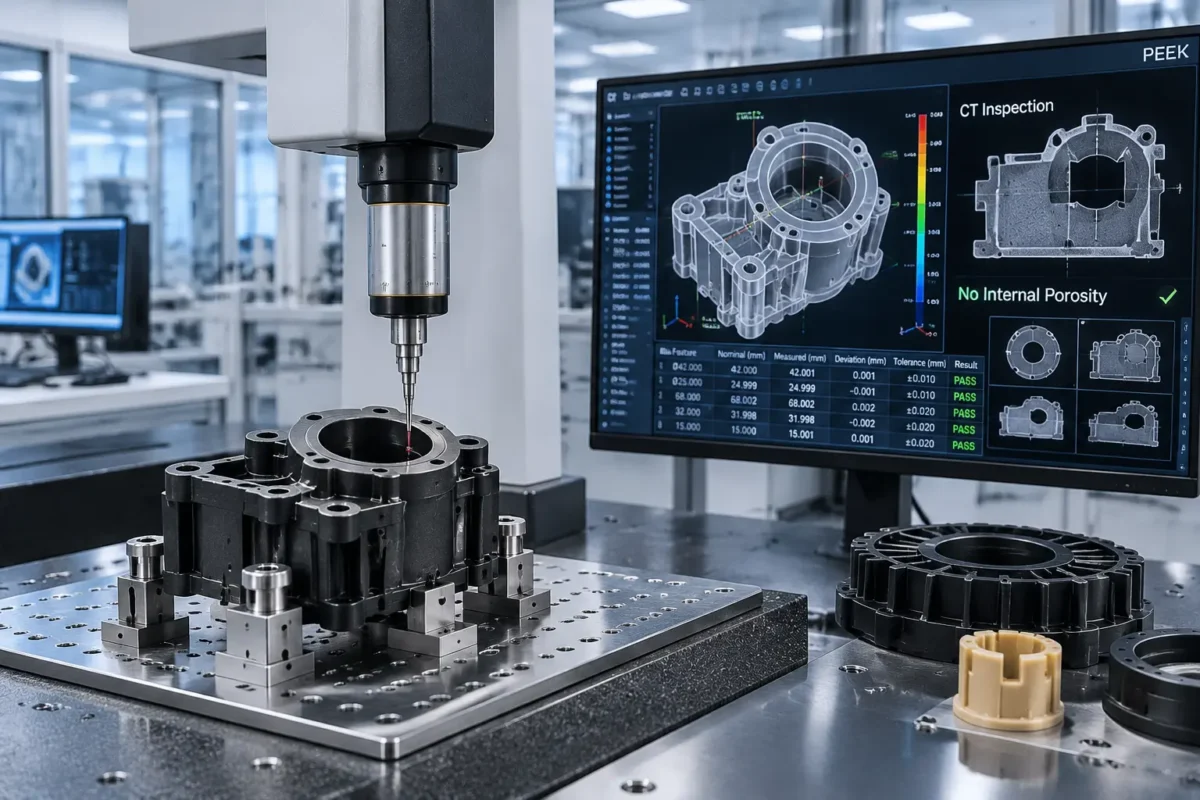
- Non-Destructive Testing (NDT): Ultrasonic (UT) and industrial Computed Tomography (CT) scanning capabilities allow technicians to detect hidden internal voids, flow flaws, and micro-cracking without sacrificing finished parts.
- Mechanical Validation: Universal tensile and flexural testing apparatus to confirm lot-to-lot structural conformance.
Abrasive, fiber-filled resins cause significant tool wear at elevated temperatures.
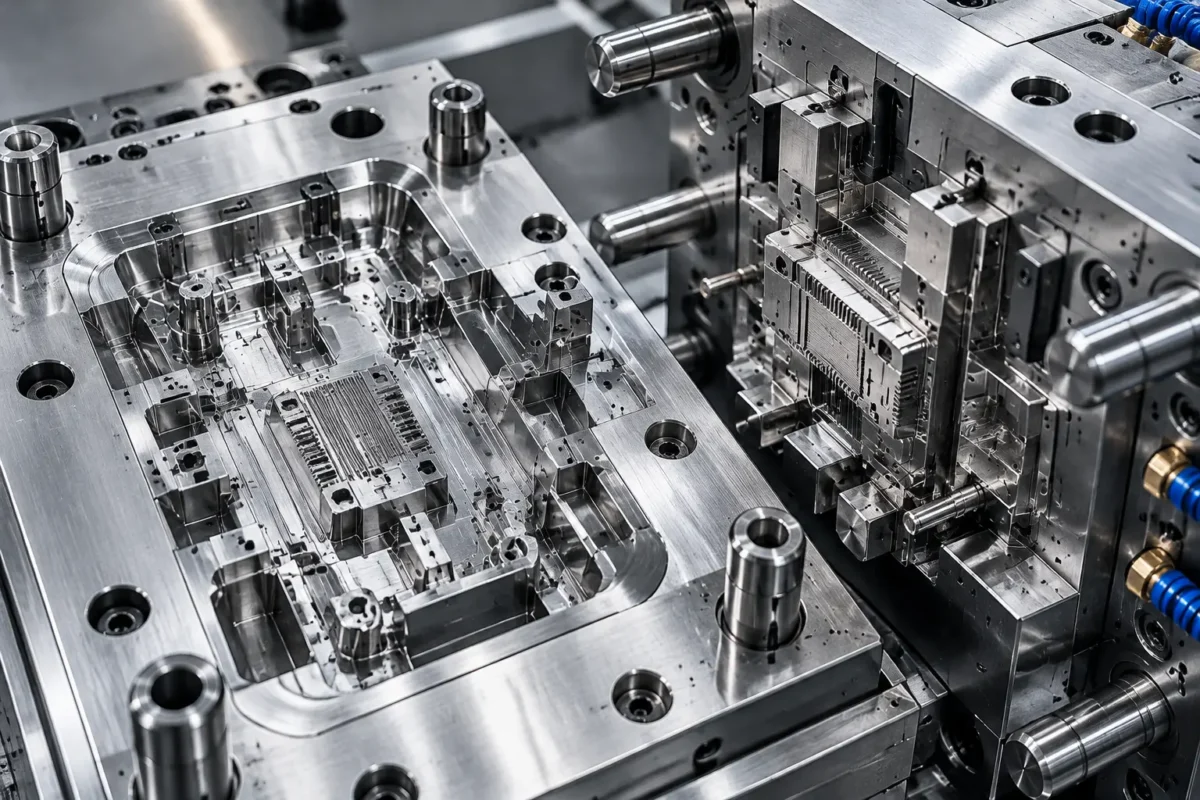
- Captive Toolroom Support: Having in-house tooling capabilities allows the molder to implement a “steel-safe” development process—iteratively machining microscopic amounts of steel between pre-production sampling runs to secure micron-level tolerances.
- Tool Transfer Management: When critical production must be moved from an existing vendor, the molder must possess the internal metallurgy knowledge and CNC equipment required to inspect, adapt, and rehabilitate transferred molds rapidly.
4. Quality Management Standards
While ISO 9001:2015 provides a standard operational baseline, mission-critical applications typically require a quality management system certified to AS9100D (Aerospace) or equivalent high-reliability standards. Suppliers operating under these frameworks implement complete raw material lot traceability, digital process-parameter archiving, and automated statistical process control across every single production run.
5. Conclusion
High-performance thermoplastics demand high-performance processing. Specifying PEEK, PAI, or PEI is an investment in ultimate part reliability—an investment that fails if entrusted to a general-purpose molder. By auditing prospective suppliers against closed-loop drying, scientific process controls, validated thermal post-processing, and captive tooling capabilities, OEMs can ensure their finished components survive the most demanding operational environments.