Blog
High-Performance PAI (Polyamide-Imide) Tubes: Engineering Properties, Advanced Extrusion Technology, and Precision Machining Guide

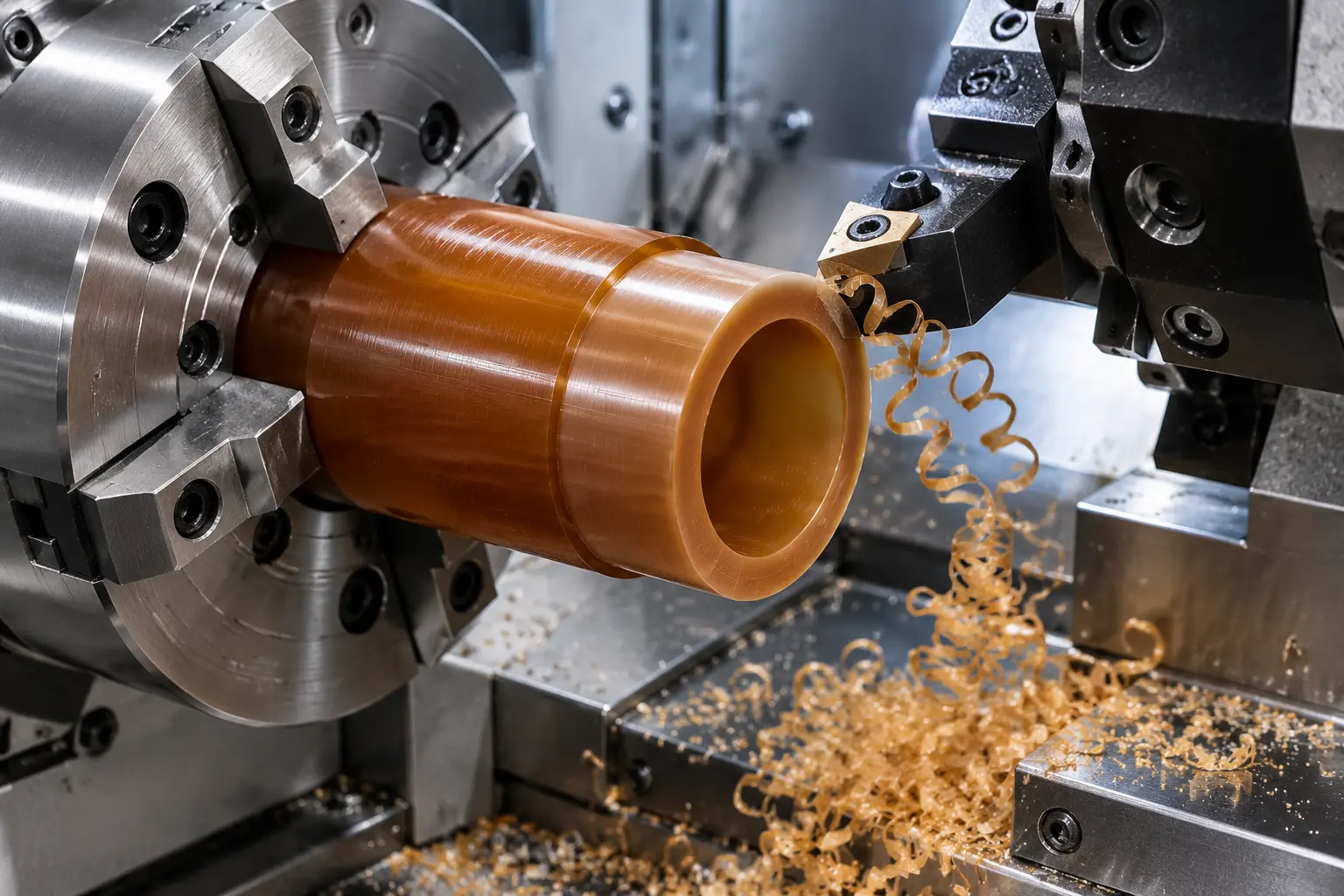
In mission-critical applications—such as subsea oil and gas measurement-while-drilling (MWD/LWD) tools, deep-space mechanisms, semiconductor plasma-etching chambers, and military aviation hydraulic systems—annular and cylindrical components must operate dependably under severe physical loads, continuous sliding friction, aggressive chemical media, and wide thermal fluctuations. High-performance Polyamide-imide (PAI) extruded tubes have emerged as the premier stock shape for manufacturing these high-reliability circular and cylindrical components.
1. Core Physical Performance Advantages of PAI Polymers
Regardless of the cross-sectional geometry, PAI represents the pinnacle of melt-processable thermoplastics:
- Thermal Stability Across Wide Temperature Spectrums: PAI features an exceptional glass transition temperature (
TgTg) of 275°C (527°F) and a heat deflection temperature (HDT) of 278°C (532°F) under mechanical load. It maintains its structural flexural and tensile modulus without thermal softening under sustained stress. Concurrently, PAI retains structural toughness at cryogenic temperatures, eliminating the low-temperature embrittlement common to conventional polymers. - Low Coefficient of Friction & Extended Tribological Life: Neat PAI possesses an intrinsically low dry-friction coefficient. By compounding the base resin with solid lubricant systems—such as polytetrafluoroethylene (PTFE), high-purity graphite powder, and short carbon fibers—bearing-grade PAI can continuously operate under elevated PV (pressure-velocity) thresholds without external grease lubrication, completely preventing galling and surface scoring against mating metal shafts.
- Alloy-Like Structural Modulus & Strength: Modified PAI reinforced with glass or high-modulus carbon fibers maintains exceptional flexural modulus at elevated temperatures. It delivers tensile performance comparable to structural light alloys while offering vital electrical isolation, chemical resistance, and mass reduction.
- Micron-Level Dimensional Stability: PAI exhibits an exceptionally low coefficient of linear thermal expansion (CLTE) and outstanding resistance to long-term compressive creep. Precision-machined bushings and dynamic sealing rings maintain tight design tolerances through severe thermal cycles, preventing binding or fluid blow-by.
- Resistance to Aviation Fuels and Hydrocarbons: PAI withstands long-term immersion in jet fuels, hydraulic fluids, high-temperature extreme-pressure greases, and a wide array of industrial hydrocarbon solvents.
2. Critical Thermal Processing: Why Multi-Week Programmed Post-Curing is Mandatory
Unlike standard engineering thermoplastics, melt extrusion represents only the initial phase of PAI profile manufacturing. Its ultimate physical properties must be unlocked through rigorous thermal post-curing:
① Complete Molecular Imidization Reaction
As-extruded PAI must be placed in programmable industrial convection ovens and subjected to a multi-stage, ramped thermal curing cycle spanning two to three weeks, culminating near 262°C (500°F). This extended exposure drives complete chain extension (imidization) and deep intermolecular cross-linking, elevating its molecular weight, chemical inertness, and thermal stability to their theoretical maximums.
② The Natural High-Wear Skin Layer & Machining Strategy
Comprehensive post-curing naturally forms a dense, darkened, ultra-hard, and chemically inert reaction skin on the outer diameter (OD) and inner diameter (ID) surfaces of the tube.
- Machining Best Practice: When manufacturing wear-resistant bushings, dynamic guide rollers, or thrust washers, retaining these as-cured OD/ID surfaces as the primary friction-mating interfaces maximizes wear life.
- Secondary Post-Curing Protocol: If tight tolerance requirements necessitate heavy CNC machining that cuts through this optimized surface into the lighter-colored core material, a secondary post-curing cycle of the finished component is highly recommended to fully restore ultimate surface hardness and tribological performance.
3. Machining Economics: PAI Tubes vs. Solid Rods and Plates
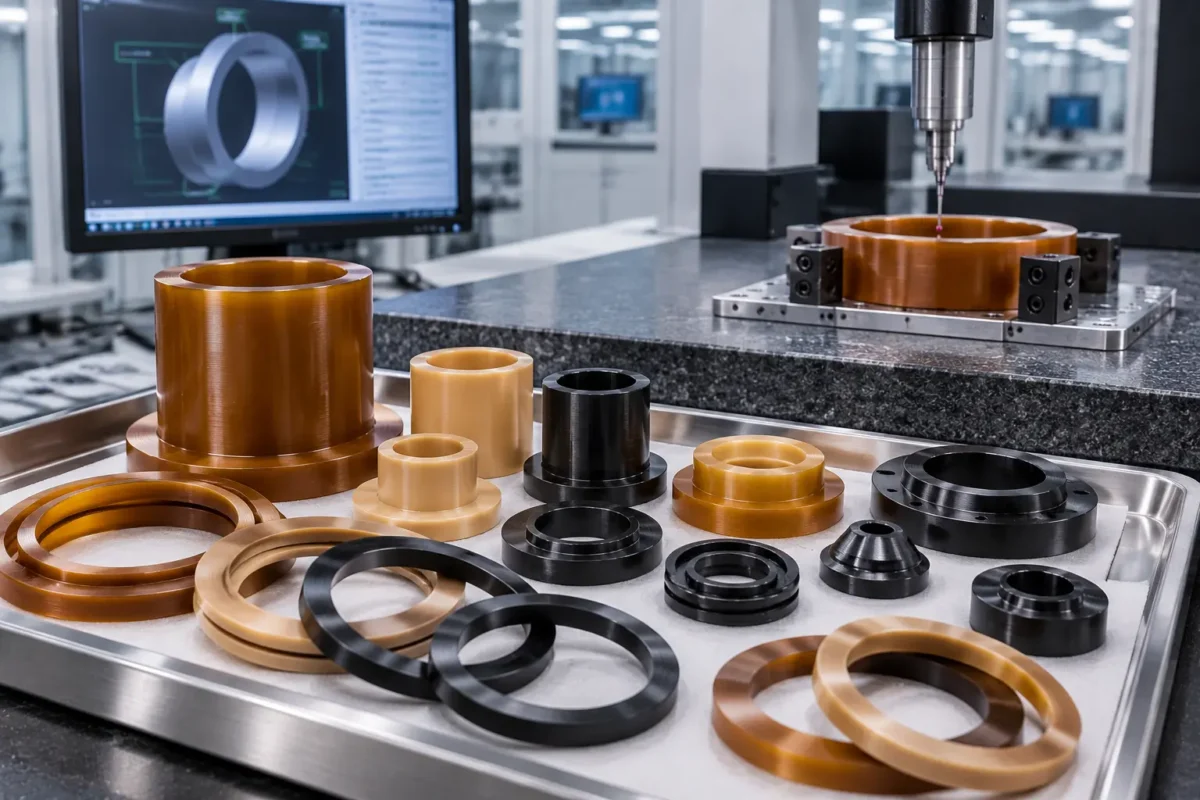
When producing dynamic seals, bushings, and cylindrical wear rings, utilizing thick-walled PAI tubing delivers substantial operational and financial advantages over machining from solid bar stock or thick plates:
- Dramatic Reduction in High-Value Material Waste: PAI is a premium, high-cost polymer. Machining hollow parts from solid round rods often turns 60% to 75% of virgin stock into non-recyclable machine chips. Utilizing hollow tube stock cuts material waste to near zero.
- Elimination of Machining Warpage & Stress Cracking: Large-diameter solid rods naturally possess steep radial cooling-stress gradients between their exterior skin and center core. Deep drilling breaks this stress equilibrium, frequently leading to uncontrolled ovalization, out-of-round warpage, or micro-cracking in precision-turned thin-walled rings. Properly stress-relieved and post-cured seamless tubes exhibit exceptionally low residual stress and superior dimensional repeatability.
- Multiplied Machining Cycle Throughput: Eliminating heavy-duty drill passes and rough internal boring cycles saves machine spindle wear, reduces cutting-tool consumption, and slashes per-part cycle times by 40% or more.
4. Extrusion Tooling Mechanics: Conventional Spider Dies vs. Seamless Extrusion
The tooling methodology used during extrusion directly dictates the internal mechanical integrity of the tube—a critical technical factor that design engineers frequently overlook:
The Inherent Flaw of Conventional Spider Dies
Standard rigid plastic tubing is often extruded using dies featuring internal mandrels supported by a central core-holder (spider). As molten polymer flows across these supporting legs, the melt stream is mechanically separated into multiple distinct flows before recombining downstream around the mandrel.
- The Knit-Line Risk: The recombination zones create longitudinal weld lines (knit lines) that run along the entire length of the tube wall.
- The Failure Mode: Under internal fluid pressure or dynamic cyclic loading, these weld lines act as structural stress concentrators. When exposed to elevated hoop stress or hydraulic impulse pressures, tubes extruded via spider dies are prone to catastrophic longitudinal splitting along these knit lines.
The Advantages of Advanced Seamless Extrusion
Advanced seamless extrusion technology eliminates melt-splitting mechanisms entirely:
- 360-Degree Homogeneous Density: The polymer melt forms a unified structure with zero flow-line demarcations, delivering uniform cross-sectional density and wall thickness.
- Optimized Circumferential Fiber Alignment: In carbon- or glass-fiber-reinforced grades, seamless processing promotes multidirectional and circumferential fiber orientation, maximizing burst pressure resistance, tensile rupture resistance, and cyclic fatigue life under severe hoop stresses.
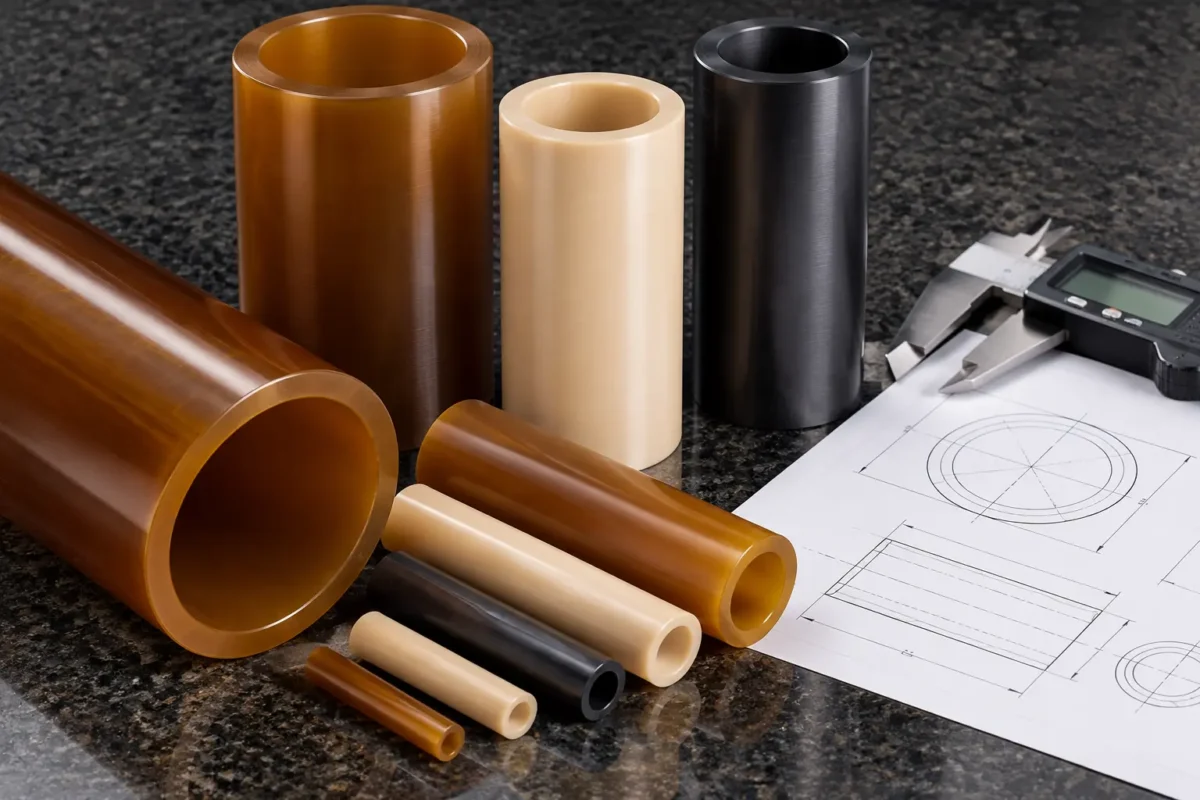
5. High-Reliability Target Applications
- Heavy-Duty Self-Lubricating Bushings & Thrust Washers: Non-lubricated sleeve bearings for commercial aviation landing gears and downhole drilling tools (MWD/LWD), replacing grease-lubricated bronze alloys in high-load, low-speed friction environments.
- High-Pressure Valve Seats & Dynamic Seals: Sealing rings, steam control seats, and compressor valve plates subject to elevated differential pressures, aggressive chemicals, and dynamic cycling.
- Centrifugal Pump & Turbocharger Rotating Components: Impeller wear rings, dynamic labyrinth seals, and turbocharger actuator bushings running reliably above 200°C in media containing abrasive particulates.
- Semiconductor Wafer-Processing Fixtures: Insulating rings, plasma-resistant chamber inserts, and wafer-retaining guides requiring micron-level thermal stability, plasma etch resistance, and ultra-low outgassing.
- Aerospace High-Flame-Retardant Hardware: Jet engine fuel-line connectors, electrical isolation conduits, and functional satellite mechanism components meeting strict FAA flammability, smoke-density, and toxicity standards.
6. Engineering Selection & Sourcing Checklist
When sourcing PAI tubes for high-precision components, engineering and procurement teams should audit suppliers against the following parameters:
- Geometry & Tolerances: Clearly define required Outside Diameter (OD), Inside Diameter (ID), wall thickness, concentricity, and cut-length tolerances.
- Formulation Selection:
- Neat / Unfilled Grade: Optimal for high dielectric isolation, impact toughness, and cryogenic exposure.
- Bearing & Wear Grade: Compounded with PTFE, graphite, and carbon fiber for continuous sliding wear.
- Structural Fiber Grade: Reinforced with 30% glass or carbon fibers for peak flexural modulus and tensile stiffness.
- Mandate Seamless Extrusion: For applications involving internal hydraulic pressure, high-speed rotation, or cyclic hoop stress, explicitly specify seamless extrusion to exclude spider-die tubes with internal weld lines.
- Thermal Conditioning Verification: Confirm that tube stock has undergone a fully validated, multi-week ramped post-curing schedule, and request raw material lot traceability certificates and mechanical test compliance data.