Blog
Colored PEEK: Moving Beyond Aesthetics to Functional Performance in High-Reliability Engineering

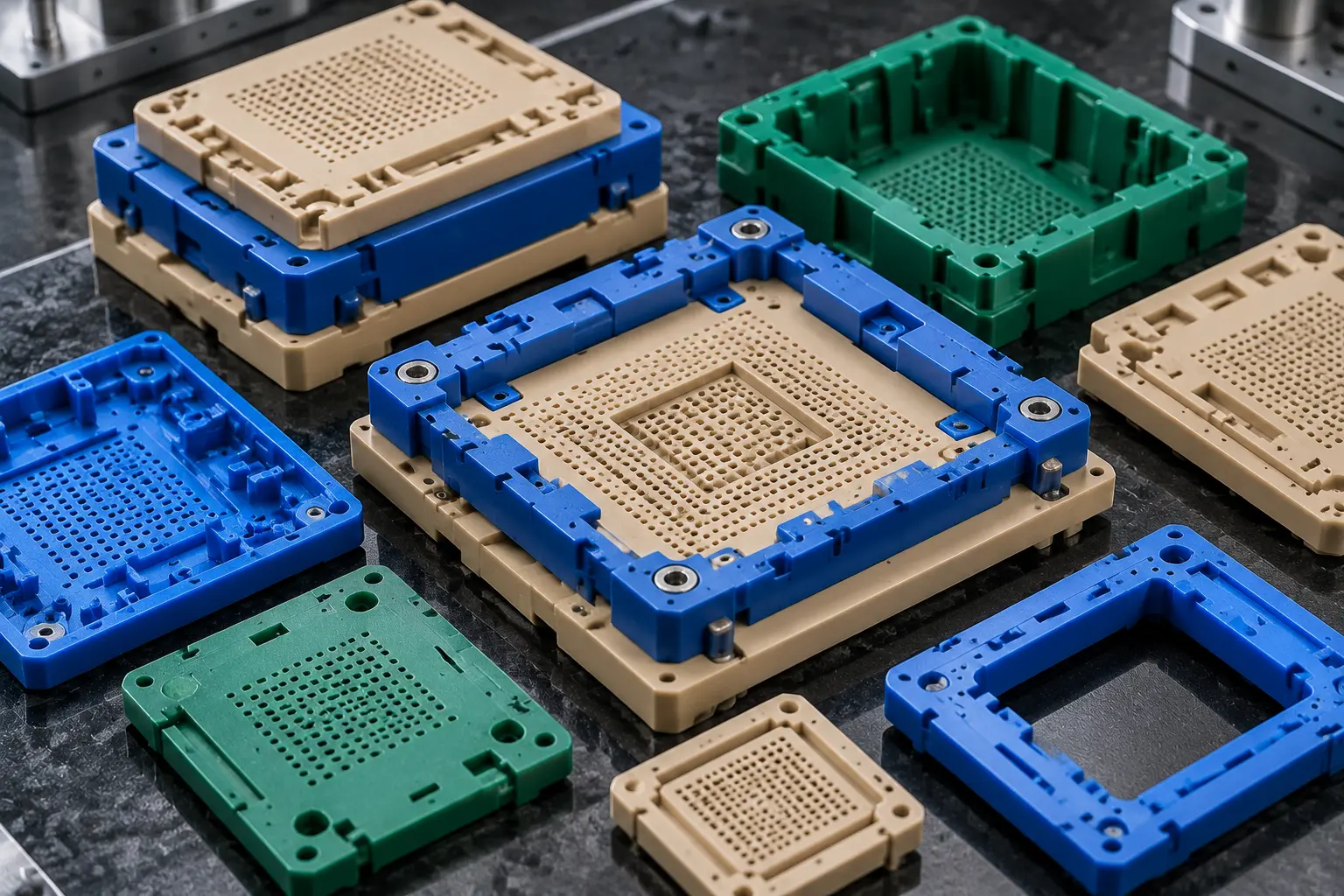
In the realm of ultra-high-performance thermoplastics, Polyether ether ketone (PEEK) represents the gold standard for extreme operating environments. Its exceptional continuous-service temperature resistance, broad chemical inertness, high mechanical modulus, and proven biocompatibility make it indispensable across aerospace, medical devices, semiconductor processing, and industrial automation.
Historically, PEEK has been confined to two standard visual profiles: natural beige (tan) and black.
However, as advanced manufacturing demands tighter error-proofing, automated optical inspection, and intuitive assembly management, integrally colored PEEK has rapidly transitioned from an aesthetic option into an essential functional engineering solution.
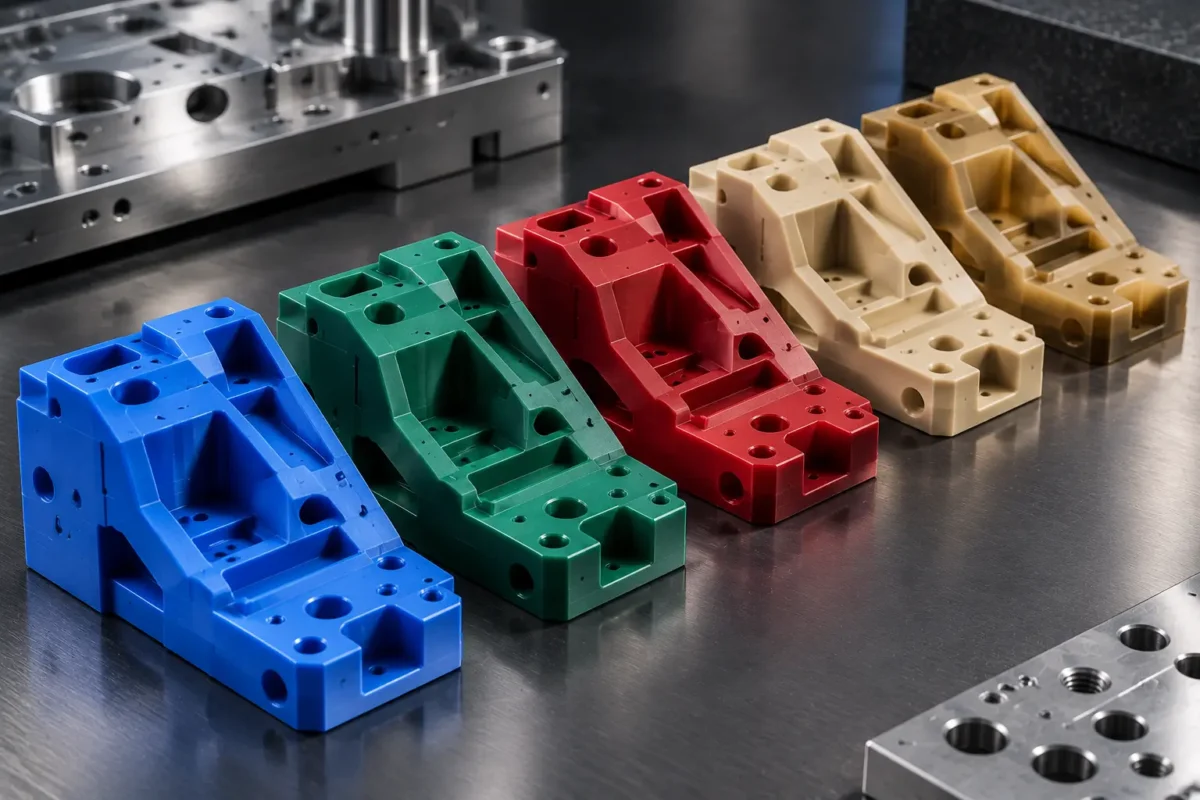
1. Functional Drivers: Why Color is an Engineering Requirement
In critical assemblies, color-coding serves as an active mechanism for risk mitigation and process optimization:
- Medical Devices & Surgical Instrumentation (Poka-Yoke Error-Proofing):
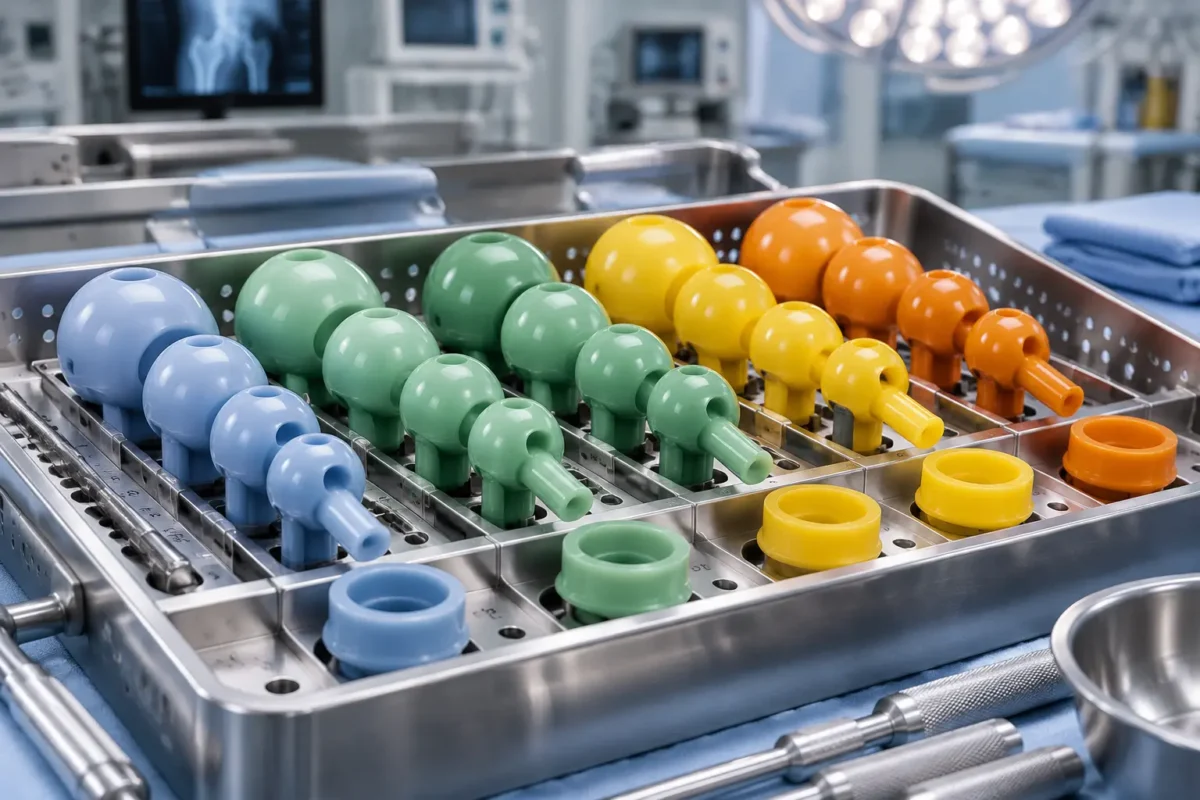
In orthopedic trial systems, spinal implants, and multi-component surgical kits, dozens of dimensionally similar instruments must be handled rapidly. Functional color-coding (e.g., color-coding surgical trial heads by millimeter increments) provides immediate visual verification, preventing sizing and assembly errors during high-stress operating room procedures. - Industrial Automation & Machine Vision Integration:
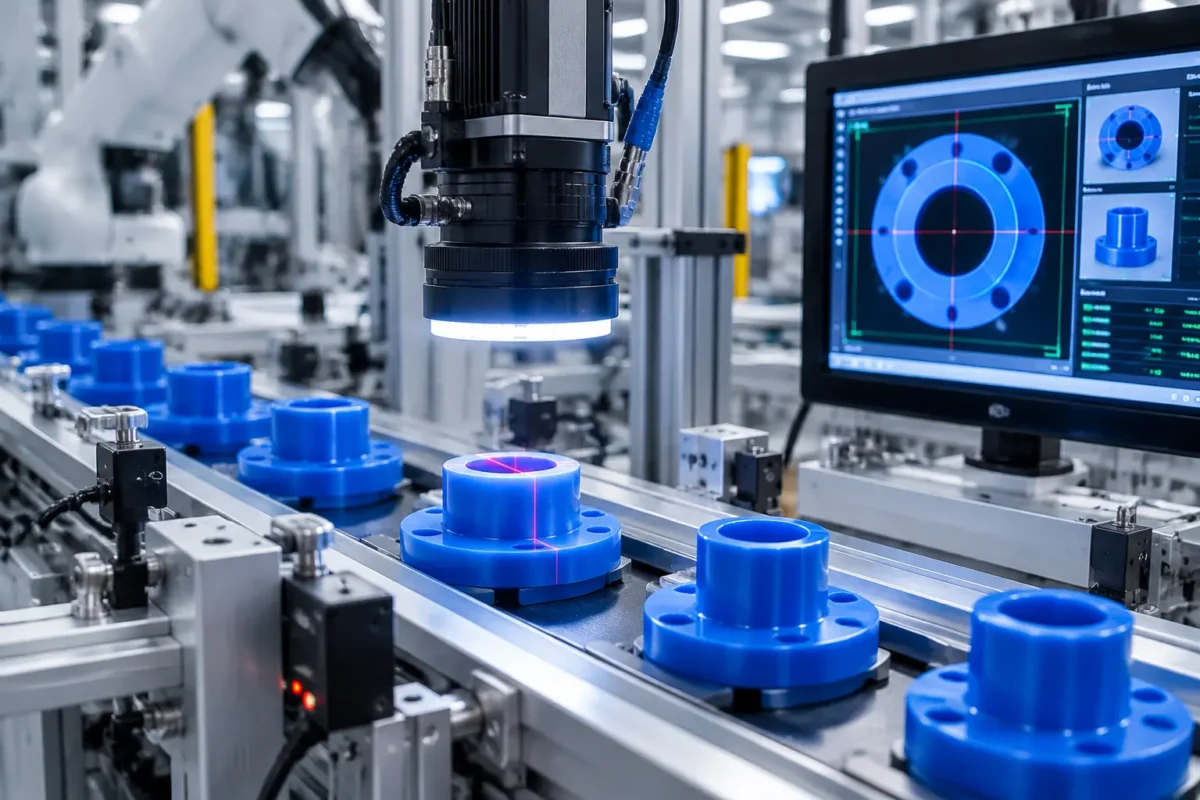
High-speed automated assembly lines utilize optical sensors and machine-vision cameras for component orientation, sorting, and quality verification. High-contrast colored PEEK components—such as guide rings, sensor housings, and pick-and-place grippers—maximize edge contrast and optical recognition rates under varying industrial lighting conditions. - Food & Pharmaceutical Processing (Foreign-Object Detection):
Contamination detection is paramount in sanitary processing lines. Natural beige plastic fragments can blend into organic foodstuffs. Utilizing high-visibility “Safety Blue” colored PEEK wear parts allows both high-resolution optical sorting cameras and manual visual inspectors to detect micro-fragments instantly should component wear occur. - Aerospace & Complex Electronics (System Line Differentiation):
In dense aircraft bay environments, color-coded PEEK brackets, wire standoffs, and fluid line clips enable technicians to instantly distinguish between hydraulic, flight-control, and critical communication conduits, streamlining troubleshooting and reducing maintenance turnaround times.
2. Technical Hurdles in Formulating Colored PEEK
Coloring PEEK is vastly more complex than adding pigment masterbatch to standard engineering resins like nylon or acetal:
- Thermal Stability at 360°C to 400°C Melt Temperatures:
PEEK has a crystalline melting point of 343°C (649°F), with injection molding and extrusion barrel temperatures commonly reaching 360°C to 400°C (680°F to 752°F). Standard organic pigments decompose, volatilize, or severely discolor within seconds at these temperatures. Colored PEEK formulations require ultra-pure, high-temperature calcined inorganic metal oxides and specialized pigments that remain thermally stable under intense processing conditions. - Preserving Virgin Mechanical Integrity:
Foreign pigment particles can disrupt polymer crystallinity and act as microscopic stress concentrators (stress risers). Inadequately engineered color formulations frequently lead to embrittlement and catastrophic drops in tensile and impact strength. Advanced compounding must achieve target chromaticity while maintaining over 95% of virgin PEEK’s mechanical properties. - Sub-10-Micron Dispersion in High-Viscosity Melts:
PEEK exhibits very high melt viscosity, making homogeneous pigment dispersion difficult. Agglomerated pigment clusters create visual flow marks, color streaking, and localized mechanical weak points. Controlled compounding requires pigment particle sizes strictly held to≤10μm≤10μm, combined with specialized high-shear twin-screw compounding to ensure absolute batch-to-batch color and structural uniformity.
3. The Manufacturing Imperative: Integral Coloration vs. Surface Coatings
Engineers have historically attempted to color PEEK components through secondary painting, pad-printing, or physical vapor deposition (PVD). In extreme environments, surface coatings consistently fail:
- Delamination Under Autoclave Sterilization: Repeated cycles of 134°C (273°F) high-pressure steam sterilization cause secondary coatings to blister, crack, and flake, introducing toxic particulates into sterile environments.
- Loss of Identification from Wear: On dynamic bearing surfaces, thrust washers, or sliding guides, surface coatings wear off rapidly, completely destroying the visual identification benefit.
- The Solution: Integral (Through-and-Through) Coloration:
By compounding high-temperature colorants directly into the polymer matrix during pelletization, the resulting stock shapes and injection-molded parts possess homogeneous color through their entire cross-section. The color will not chip, peel, leach, or wear away, surviving thousands of severe sterilization cycles and aggressive mechanical friction.
4. Custom Formulation, Testing, and Regulatory Compliance
Sourcing functional colored PEEK requires an audit of material qualification capabilities:
- Targeted Color Matching & Chromatic Tolerance: Formulations should be developed to match international color standards (Pantone / RAL) while maintaining strict spectrophotometric batch control (
ΔEΔElimits). - Comprehensive Mechanical Validation: Every custom formulation must be verified via ASTM/ISO testing for tensile strength, elongation, flexural modulus, and Izod impact resistance to ensure zero unpredicted property loss.
- Global Regulatory Conformance: Depending on the end application, colored PEEK grades must be backed by formal compliance documentation, including:
- Food Contact: FDA 21 CFR and EU 10/2011 compliance.
- Environmental & Safety: REACH, RoHS, and UL 94 V-0 flame-retardant performance.
- Medical Biocompatibility: Formulations evaluated against ISO 10993 and USP Class VI biocompatibility requirements for skin contact and surgical instruments.
5. Conclusion
Colored PEEK represents a major technical step forward in the functionalization of ultra-high-performance polymers. By combining nano-scale pigment dispersion with high-temperature material stability and through-and-through integral coloration, design engineers no longer have to compromise between structural reliability and visual usability. Colored PEEK delivers the ultimate solution for risk mitigation, error-free assembly, and optical traceability across the most demanding industries.