

Blog
PEEK Polymer: Properties, Applications, Grades and Engineering Uses

Introduction to PEEK Polymer
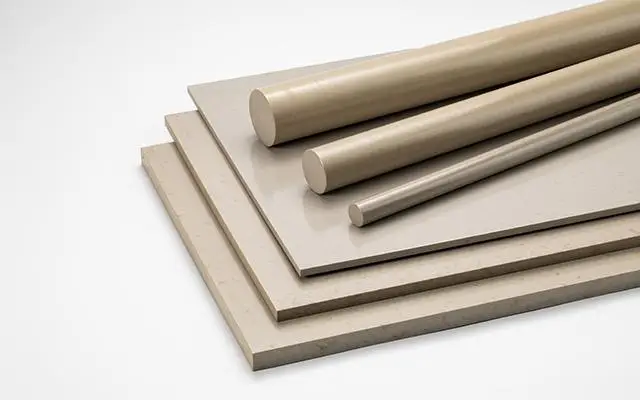
Polyether ether ketone (PEEK) is a high-performance thermoplastic belonging to the polyaryletherketone (PAEK) family. Known for its excellent mechanical strength, thermal stability, chemical resistance, and wear performance, PEEK is widely used in engineering applications where conventional plastics cannot provide sufficient reliability.
Developed in the late 1970s, PEEK has become an important material for industries requiring components that can withstand elevated temperatures, mechanical stress, and chemically aggressive environments.
Unlike standard engineering plastics, PEEK combines high mechanical performance with relatively low density, making it a practical alternative to certain metal components in applications where weight reduction and corrosion resistance are important.
Today, PEEK is commonly used in aerospace systems, medical devices, semiconductor equipment, automotive components, oil and gas machinery, and precision industrial equipment.
1. Molecular Structure and Characteristics of PEEK

PEEK is a semi-crystalline thermoplastic with a molecular backbone consisting of repeating aromatic rings connected by ether and ketone linkages.
These structural elements contribute to its overall performance:
- Aromatic rings: Provide rigidity and contribute to mechanical strength and thermal stability.
- Ether linkages: Allow a degree of molecular flexibility, helping balance toughness and processability.
- Ketone groups: Contribute to the polymer’s structural stability and high-temperature performance.
The combination of these molecular features gives PEEK a balance of strength, toughness, and heat resistance that is difficult to achieve with conventional thermoplastics.
Its semi-crystalline structure also plays an important role in dimensional stability, chemical resistance, and mechanical behavior. Processing conditions, particularly cooling rates and thermal history, can influence crystallinity and the final properties of molded or machined components.
2. Key Physical and Mechanical Properties of PEEK
PEEK is selected for demanding engineering applications because of its combination of thermal, mechanical, chemical, and tribological properties.
2.1 Mechanical Strength and Dimensional Stability
Unfilled PEEK typically offers a tensile strength of approximately 90–100 MPa, depending on the grade and test conditions.
Other important characteristics include:
- High tensile and flexural strength
- Good fatigue resistance under cyclic loading
- Excellent creep resistance compared with many conventional thermoplastics
- Good dimensional stability
- High resistance to mechanical stress
These properties make PEEK suitable for precision components, structural supports, bearings, and load-bearing parts.
For applications requiring greater stiffness or load capacity, reinforced grades containing carbon fiber or glass fiber can provide higher mechanical performance.
2.2 High Temperature Resistance
Thermal stability is one of the most important advantages of PEEK.
Typical thermal characteristics of unfilled PEEK include:
- Continuous service temperature: approximately 250°C, depending on grade and operating conditions
- Melting temperature: approximately 343°C
- Glass transition temperature: approximately 143°C
PEEK can maintain useful mechanical properties at elevated temperatures, making it suitable for components operating in environments where conventional engineering plastics may soften or lose structural performance.
However, continuous service temperature, short-term heat resistance, and heat deflection temperature are different measurements. Actual operating limits should be evaluated according to the applied load, exposure time, and environmental conditions.
2.3 Chemical Resistance
PEEK offers excellent resistance to many chemicals, including:
- Hydrocarbons and petroleum-based fluids
- Many organic solvents
- Selected acids and alkaline solutions
- Hot water and steam
Its chemical stability makes it suitable for chemical processing equipment, fluid handling systems, laboratory instruments, and industrial sealing applications.
Nevertheless, chemical compatibility depends on the chemical concentration, temperature, exposure duration, and specific PEEK grade. Strong oxidizing acids and certain aggressive chemical environments require separate compatibility evaluation.
2.4 Wear Resistance and Friction Performance
PEEK provides good wear resistance and mechanical durability, particularly in applications involving repeated contact or sliding movement.
Its tribological performance can be further improved through material modification.
Common modifications include:
- Carbon fiber reinforcement for increased stiffness and load-bearing capacity
- Graphite for improved sliding behavior
- PTFE for reduced friction
- Combined carbon fiber, graphite, and PTFE formulations for demanding wear applications
These modified grades are widely considered for bearings, bushings, gears, wear plates, and other moving mechanical components.
The appropriate formulation depends on contact pressure, sliding speed, lubrication, counterface material, and operating temperature.
2.5 Lightweight Alternative to Metal
With a typical density of approximately 1.30–1.32 g/cm³, unfilled PEEK is significantly lighter than common engineering metals.
For comparison, aluminum alloys typically have densities around 2.7 g/cm³, while stainless steel is generally around 7.9–8.0 g/cm³.
Replacing selected metal components with PEEK can reduce component weight, improve corrosion resistance, and simplify certain mechanical designs.
However, metal replacement requires consideration of stiffness, strength, creep, fatigue, and long-term operating loads rather than density alone.
3. PEEK Polymer Grades and Material Modifications
PEEK is available in different formulations to meet specific engineering requirements.
3.1 Virgin PEEK
Virgin PEEK contains no intentional reinforcing fibers or functional fillers.
It offers a balanced combination of mechanical strength, toughness, chemical resistance, and thermal stability.
Typical applications include precision-machined components, electrical insulation parts, fluid handling components, and general industrial equipment.
3.2 Carbon Fiber Reinforced PEEK
Carbon fiber reinforced PEEK offers higher stiffness, improved dimensional stability, and better load-bearing performance than unfilled PEEK.
It is commonly used for:
- Structural brackets
- High-load bearings
- Precision mechanical components
- Aerospace equipment
- Industrial wear parts
3.3 Glass Fiber Reinforced PEEK
Glass fiber reinforced PEEK provides increased stiffness and reduced thermal expansion.
It is suitable for structural components and precision parts requiring improved dimensional stability under elevated temperatures.
3.4 PTFE-Filled PEEK
PTFE-filled PEEK is designed to improve sliding characteristics and reduce friction in specific applications.
Typical uses include bearings, sliding elements, bushings, and other tribological components.
3.5 ESD and Electrically Modified PEEK
Electrically modified PEEK grades are developed for applications requiring controlled electrical behavior.
Depending on the formulation, they can provide:
- Static dissipative properties
- Electrical conductivity
- Improved electrostatic discharge control
These materials are particularly relevant to semiconductor manufacturing equipment, electronic fixtures, and precision handling systems.
Electrical resistance and resistivity should always be verified against the actual grade specifications and application requirements.
4. Industrial Applications of PEEK Polymer
The combination of high-temperature capability, mechanical strength, and chemical resistance makes PEEK suitable for a wide range of industrial sectors.
4.1 Aerospace Industry
In aerospace engineering, PEEK is used in applications where weight reduction, mechanical reliability, and thermal performance are essential.
Typical components include:
- Aircraft structural brackets
- Cable insulation components
- Bearings and bushings
- Lightweight housings
- Fluid system components
PEEK’s high strength-to-weight ratio makes it a useful material for replacing selected metal parts.
4.2 Medical and Healthcare Industry
Medical-grade PEEK is widely used in selected medical devices because of its radiolucency, mechanical properties, and the availability of appropriately qualified biocompatible grades.
Applications include:
- Spinal fusion cages
- Orthopedic instrument components
- Surgical instrument handles
- Medical equipment housings
- Selected implantable devices
Its radiolucency allows medical professionals to obtain X-ray and CT images without the significant imaging obstruction associated with many metallic materials.
It is important to distinguish between general industrial PEEK and medical-grade PEEK. Biocompatibility, sterilization resistance, and regulatory compliance must be verified for the specific grade and intended medical application.
4.3 Automotive Industry
PEEK is used in automotive systems where conventional plastics may not provide sufficient heat resistance or mechanical durability.
Typical applications include:
- Transmission components
- Pump parts
- Valve components
- Electrical connectors
- Sealing elements
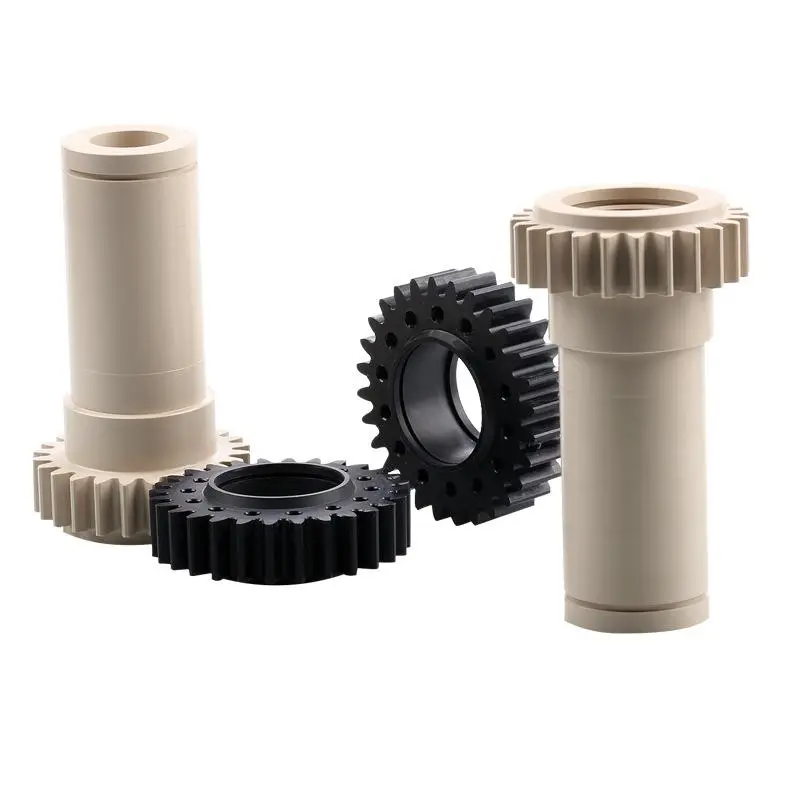
- Precision gears
Its ability to operate under elevated temperatures and exposure to automotive fluids makes it valuable in selected powertrain and electrical applications.
4.4 Oil and Gas Industry
Oil and gas equipment often operates under high pressure, elevated temperatures, and exposure to aggressive fluids.
PEEK is used in selected components such as:
- Valve seats
- Backup rings
- Compressor components
- Bearings
- Downhole equipment parts
- Wear-resistant sealing components
Material selection must account for pressure, temperature, chemical exposure, decompression behavior, and the specific operating environment.
4.5 Semiconductor and Electronics Industry
PEEK is also used in semiconductor manufacturing and electronic equipment where dimensional stability, chemical resistance, and controlled electrical properties are important.
Typical applications include:
- Wafer handling components
- Semiconductor fixtures
- Insulating supports
- Precision positioning parts
- ESD-controlled components
Specialty grades may be selected according to electrical resistivity, purity, outgassing, and contamination requirements.
5. Common PEEK Semi-Finished Products and Manufacturing Methods
PEEK is commercially available in several semi-finished forms, allowing manufacturers to produce components with different geometries and dimensional requirements.
5.1 PEEK Rods
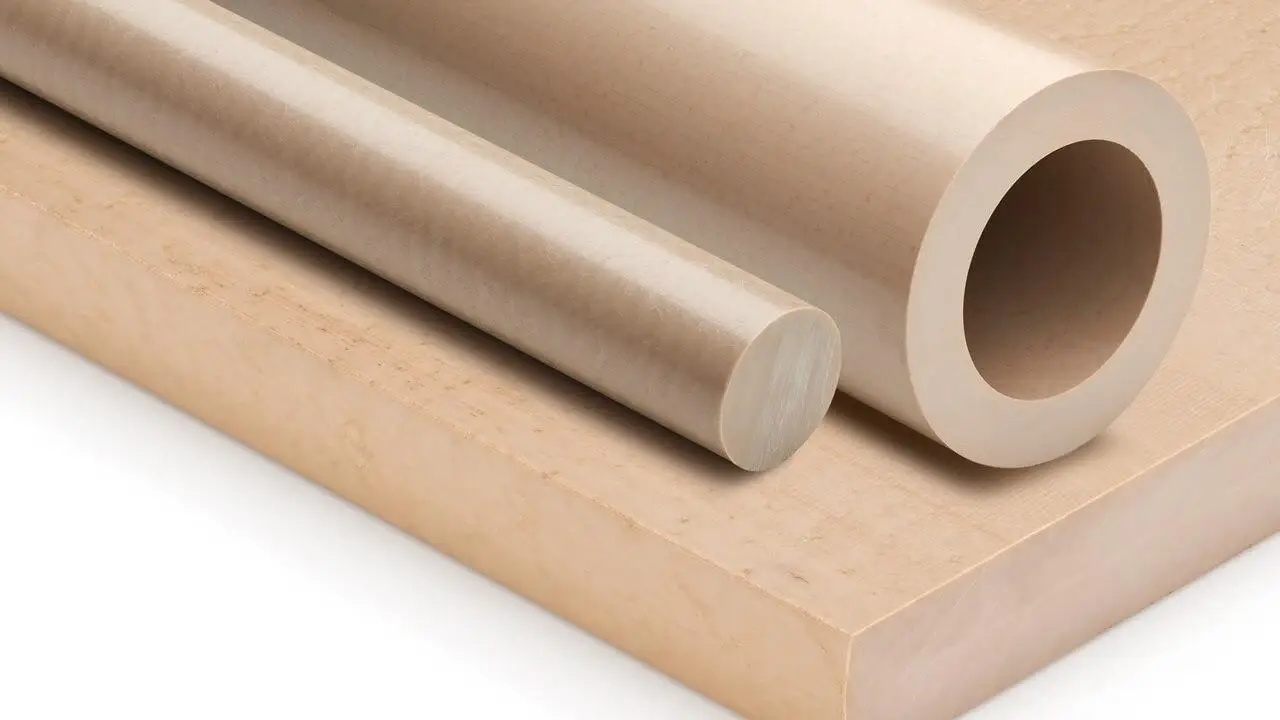
PEEK rods are commonly used as raw materials for CNC machining.
They are suitable for manufacturing:
- Precision gears
- Bushings
- Bearings
- Valve components
- Cylindrical mechanical parts
Rod dimensions and material grades should be selected according to the finished component’s geometry and machining requirements.
5.2 PEEK Sheets and Plates
PEEK sheets and plates are widely used for flat or complex machined components.
Common applications include:
- Semiconductor equipment parts
- Electrical insulation components
- Structural supports
- Precision fixtures
- Industrial wear plates
Available thicknesses and dimensions vary by supplier and manufacturing process.
5.3 PEEK Tubes
PEEK tubes are used in fluid handling, analytical instruments, laboratory equipment, and chemical processing systems.
They are particularly useful where chemical resistance, dimensional accuracy, and high-temperature performance are required.
5.4 CNC Machining and Injection Molding
PEEK components can be manufactured through different processes depending on the required geometry, tolerance, and production volume.
CNC Machining
CNC machining is suitable for prototypes, custom components, and low-to-medium volume production. It allows manufacturers to produce complex geometries and tight dimensional tolerances from PEEK rods, sheets, and tubes.
Injection Molding
Injection molding is suitable for repeatable production of complex geometries and larger production quantities. It requires appropriate mold design and careful control of processing temperatures, filling behavior, and crystallization.
The choice between machining and injection molding depends on the component design, production volume, tooling investment, and dimensional requirements.
6. How to Select the Right PEEK Material
Choosing the correct PEEK grade requires more than comparing a single material property.
Engineers should evaluate the actual operating conditions before selecting a formulation.
| Application requirement | PEEK material to consider |
|---|---|
| General mechanical components | Virgin PEEK |
| High stiffness and load capacity | Carbon fiber reinforced PEEK |
| Structural stability | Glass fiber reinforced PEEK |
| Reduced friction and wear | PTFE-filled or tribological PEEK |
| Electrostatic control | ESD-modified PEEK |
| Medical applications | Qualified medical-grade PEEK |
Other factors should also be considered, including:
- Continuous operating temperature
- Mechanical loading and creep requirements
- Chemical exposure
- Friction and wear conditions
- Electrical resistivity
- Dimensional tolerances
- Regulatory and material certification requirements
A suitable grade should be selected based on the complete operating environment rather than one isolated specification.
Conclusion: Why PEEK Remains an Important Engineering Plastic
PEEK combines high mechanical strength, thermal stability, chemical resistance, and wear performance in a lightweight thermoplastic material.
Its availability in different grades and semi-finished forms makes it suitable for a broad range of applications, from precision CNC-machined parts to injection-molded industrial components.
Whether used in aerospace equipment, medical devices, semiconductor systems, automotive components, or oil and gas machinery, the right PEEK formulation can help engineers achieve reliable performance under demanding operating conditions.
Understanding the differences between virgin, reinforced, and specialty PEEK grades is essential for selecting the right material and manufacturing process for each application.