Blog
Fiber-Reinforced PEEK: How Carbon and Glass Fibers Improve Material Performance

Published by: PEICHINA Engineering & Technical Team
Category: PEEK Materials / Polymer Modification / Engineering Insights
Introduction: Why Does PEEK Need Fiber Reinforcement?
Polyether Ether Ketone (PEEK) is a high-performance thermoplastic known for its excellent thermal stability, chemical resistance, wear resistance, and mechanical strength. These properties make it suitable for demanding applications in aerospace, semiconductor equipment, automotive engineering, medical devices, and industrial machinery.
Despite its outstanding properties, unfilled PEEK has certain limitations when used in applications requiring high stiffness, dimensional stability, and sustained mechanical loading.
Fiber reinforcement provides an effective way to address these requirements. By incorporating reinforcing fibers into the PEEK matrix, manufacturers can develop composite materials with improved mechanical properties and performance characteristics tailored to specific operating conditions.
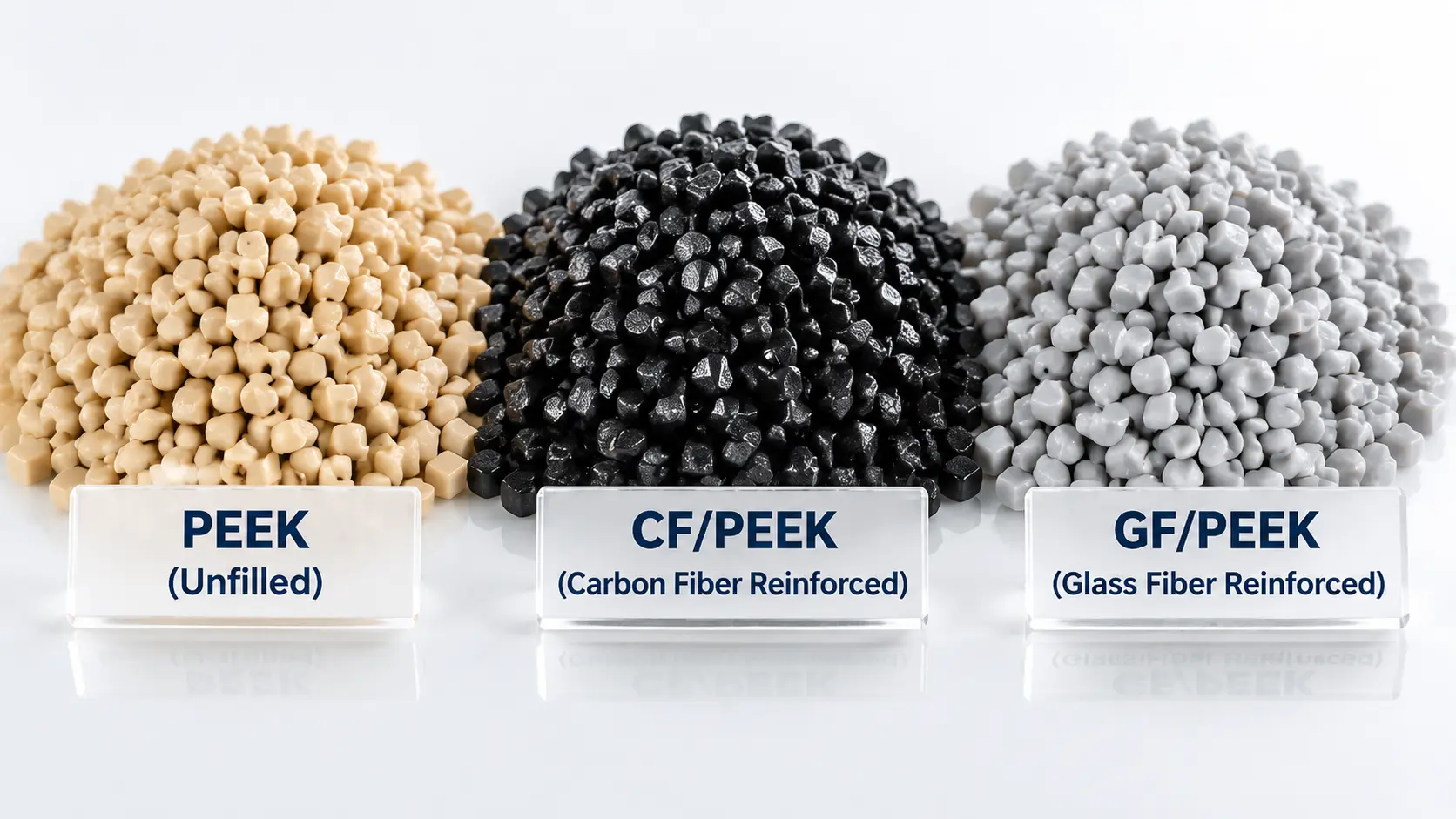
Among the available reinforcement options, carbon fiber (CF) and glass fiber (GF) are two of the most widely used materials.
But how do these fibers actually improve PEEK? And what are the differences between carbon fiber reinforced PEEK and glass fiber reinforced PEEK?
Understanding their reinforcement mechanisms helps engineers select the right material for demanding applications.
1. Understanding Fiber-Reinforced PEEK
PEEK is a semi-crystalline thermoplastic polymer with a molecular structure containing alternating ether and ketone groups. This structure contributes to its high-temperature performance, chemical stability, and mechanical strength.
In its unfilled form, PEEK offers a balanced combination of properties. However, certain engineering applications require greater rigidity, improved load-bearing capacity, or enhanced resistance to deformation.
Fiber reinforcement addresses these requirements by introducing high-strength fibers into the polymer matrix.
Depending on fiber length and arrangement, reinforced PEEK composites can generally be divided into three categories:
Short Fiber Reinforced PEEK
Short fibers are distributed throughout the polymer matrix during compounding. This is a well-established approach for injection molding, offering relatively efficient processing and good production consistency.
Long Fiber Reinforced PEEK
Longer fibers provide greater reinforcement potential and can improve load transfer compared with conventional short-fiber systems. Their performance depends on fiber length retention, distribution, and processing conditions.
Continuous Fiber Reinforced PEEK
Continuous fibers create extended load-bearing reinforcement paths within the composite. These materials are particularly relevant to advanced structural applications where high specific strength, stiffness, and directional mechanical performance are required.
Among these reinforcement systems, carbon fiber and glass fiber are commonly selected according to the mechanical and functional requirements of the final component.
2. How Fiber Reinforcement Improves PEEK Performance
The performance improvement of fiber-reinforced PEEK is not simply the result of adding stronger materials. It involves several interconnected physical and structural mechanisms.
2.1 Higher Strength and Stiffness
Carbon fibers and glass fibers generally possess much higher elastic moduli than unfilled PEEK.
When properly incorporated into the polymer matrix, these fibers help resist deformation under external loading.
The resulting composite can achieve:
- Higher tensile modulus
- Improved flexural stiffness
- Greater resistance to deformation
- Enhanced load-bearing capability
- Better dimensional stability under appropriate operating conditions
The Rule of Mixtures provides a simplified theoretical framework for understanding this reinforcement effect.
In an idealized continuous, aligned fiber composite, the longitudinal elastic modulus can be estimated from the properties and volume fractions of the fiber and matrix.
However, actual injection-molded components usually contain short fibers with varying orientations and distributions. Therefore, their mechanical performance also depends on fiber length, orientation, fiber content, and interfacial bonding.
2.2 Efficient Stress Transfer Between Fibers and PEEK
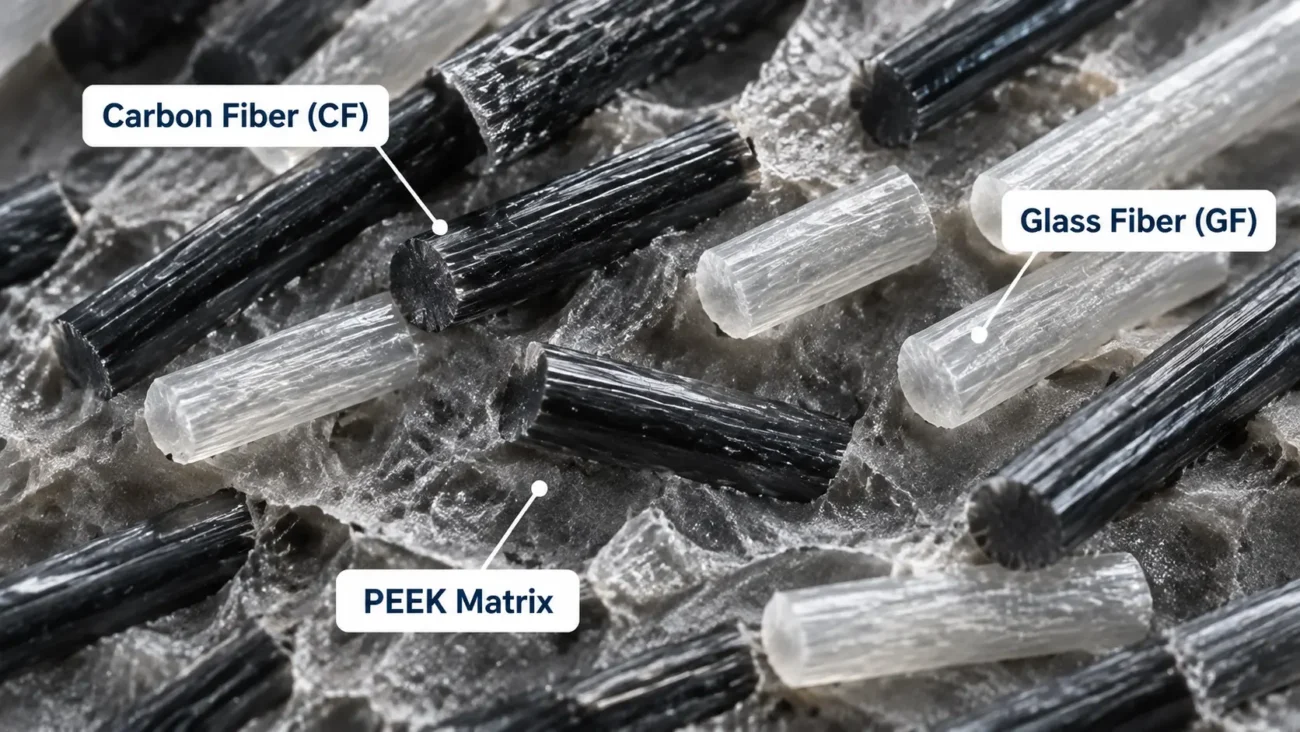
One of the most important factors in fiber-reinforced PEEK is the interface between the reinforcing fiber and the polymer matrix.
When an external force is applied to a composite component, the surrounding PEEK matrix transfers part of the load to the reinforcing fibers.
Effective stress transfer requires sufficient adhesion between the two materials.
If the interface is weak, several problems may occur:
- Fiber pull-out during fracture
- Interfacial debonding
- Microvoid formation
- Local stress concentration
- Premature mechanical failure
A well-developed fiber-matrix interface allows the reinforcing fibers to contribute more effectively to the overall mechanical performance.
This is why fiber surface treatment and compatibility with the PEEK matrix are important considerations in composite material development.
2.3 Differences Between Carbon Fiber and Glass Fiber Reinforcement
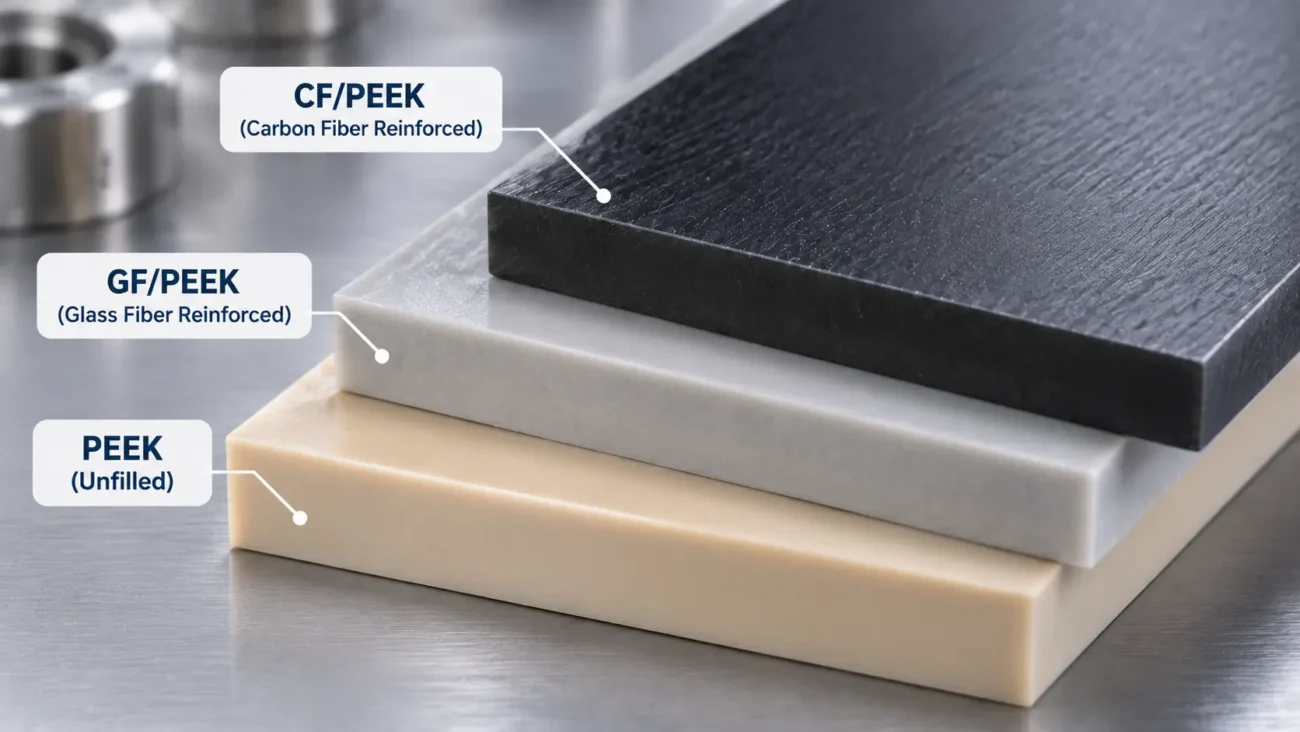
Although both carbon fiber and glass fiber can improve PEEK performance, their material characteristics lead to different reinforcement effects.
Carbon Fiber Reinforced PEEK (CF/PEEK)
Carbon fibers offer high specific strength and stiffness. Their incorporation into PEEK can significantly increase the composite’s rigidity and reduce deformation under mechanical loading.
Typical advantages include:
- High elastic modulus
- Improved structural stiffness
- Excellent strength-to-weight ratio
- Reduced thermal expansion in relevant directions
- Potential improvements in wear performance, depending on formulation and contact conditions
CF/PEEK is commonly considered for precision mechanical components, aerospace structures, industrial bearings, and lightweight load-bearing parts.
Glass Fiber Reinforced PEEK (GF/PEEK)
Glass fibers provide effective mechanical reinforcement and are frequently used when increased stiffness and dimensional stability are required.
Depending on fiber content and composite formulation, GF/PEEK can offer:
- Increased tensile and flexural modulus
- Improved resistance to deformation
- Enhanced dimensional stability
- A balance between mechanical performance and material cost
Compared with carbon fiber systems, glass fiber reinforced PEEK may exhibit different fracture and deformation characteristics. However, its actual toughness and elongation must be evaluated using the specific grade’s test data rather than assuming that all GF/PEEK formulations are more ductile.
The key distinction: Carbon fiber reinforced PEEK is often selected for demanding stiffness-to-weight requirements, while glass fiber reinforced PEEK is an alternative for applications requiring mechanical reinforcement and dimensional stability with a different cost-performance balance.
3. The Role of Crystallization and Fiber-Matrix Interface
PEEK is a semi-crystalline polymer. Its crystalline structure plays an important role in determining mechanical properties, thermal behavior, and dimensional stability.
When reinforcing fibers are introduced, they can influence the crystallization behavior of the surrounding polymer matrix.
3.1 Fiber-Induced Crystallization
Certain fiber surfaces can act as heterogeneous nucleation sites, encouraging PEEK chains to crystallize near the fiber interface.
Carbon fiber surfaces, depending on their surface chemistry and treatment, can influence local nucleation and crystallization behavior.
This may lead to the formation of transcrystalline regions around individual fibers under suitable processing conditions.
Such interfacial structures can influence stress transfer and the mechanical behavior of the composite.
However, the extent of this effect depends on several variables, including:
- Crystallization temperature
- Cooling rate
- Fiber surface condition
- Fiber distribution
- PEEK molecular characteristics
Consequently, the final composite properties cannot be predicted from fiber type alone.
3.2 Why Fiber Surface Treatment Matters
PEEK has a relatively high melt viscosity during processing. Achieving effective fiber wetting and uniform dispersion is therefore an important challenge.
If the fiber surface is poorly wetted by the polymer, defects may develop at the interface.
These defects can reduce load-transfer efficiency and negatively affect mechanical reliability.
Several approaches are used to improve fiber-matrix compatibility:
Oxidation Treatment: Modifies the fiber surface and can introduce functional groups that improve surface activity.
Plasma Treatment: Alters surface characteristics without requiring extensive changes to the bulk fiber structure.
Chemical Modification: Introduces surface modifications designed to improve interaction with the polymer matrix.
Sizing Technology: Applies specialized surface coatings to improve fiber handling, processing compatibility, and interfacial performance.
The effectiveness of each method depends on the fiber type, surface chemistry, PEEK formulation, and processing conditions.
For manufacturers, controlling these factors is essential to achieving consistent composite quality.
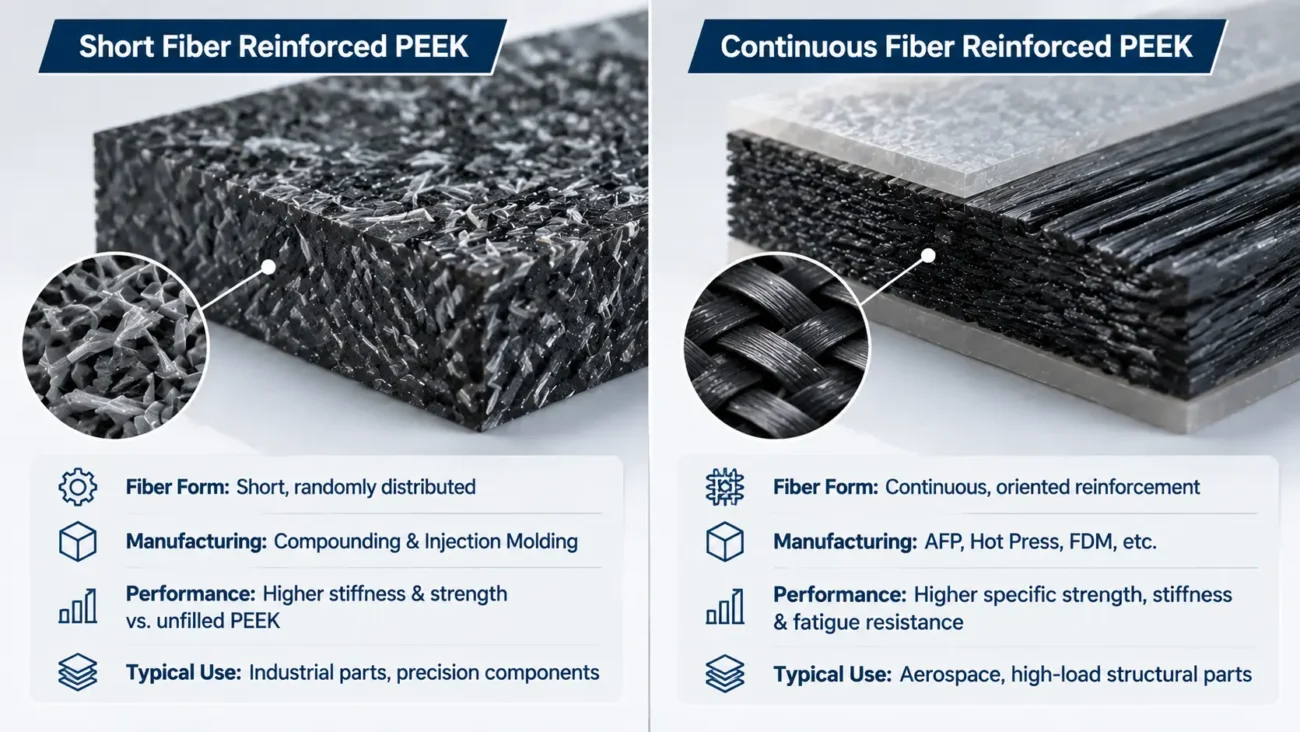
4. Short Fiber vs. Continuous Fiber Reinforced PEEK
Fiber architecture has a major influence on the final properties and manufacturing possibilities of PEEK composites.
Short fiber reinforced PEEK is widely used in conventional injection molding and offers relatively high production efficiency.
Continuous fiber reinforced PEEK, on the other hand, provides opportunities for more advanced structural applications.
| Comparison | Short Fiber PEEK | Continuous Fiber PEEK |
|---|---|---|
| Fiber structure | Discontinuous fibers | Continuous reinforcement |
| Manufacturing | Compounding and injection molding | Specialized composite processing |
| Fiber orientation | Generally process-dependent | Can be deliberately controlled |
| Mechanical performance | Improved over unfilled PEEK | High potential in reinforced directions |
| Typical applications | Industrial components and precision parts | Advanced structural components |
Continuous fiber systems can deliver excellent directional mechanical properties. However, their performance depends heavily on fiber placement, matrix impregnation, consolidation, and manufacturing quality.
For many industrial components, short carbon fiber or glass fiber reinforced PEEK remains a practical choice because of its established processing methods and availability.
5. Applications of Fiber-Reinforced PEEK
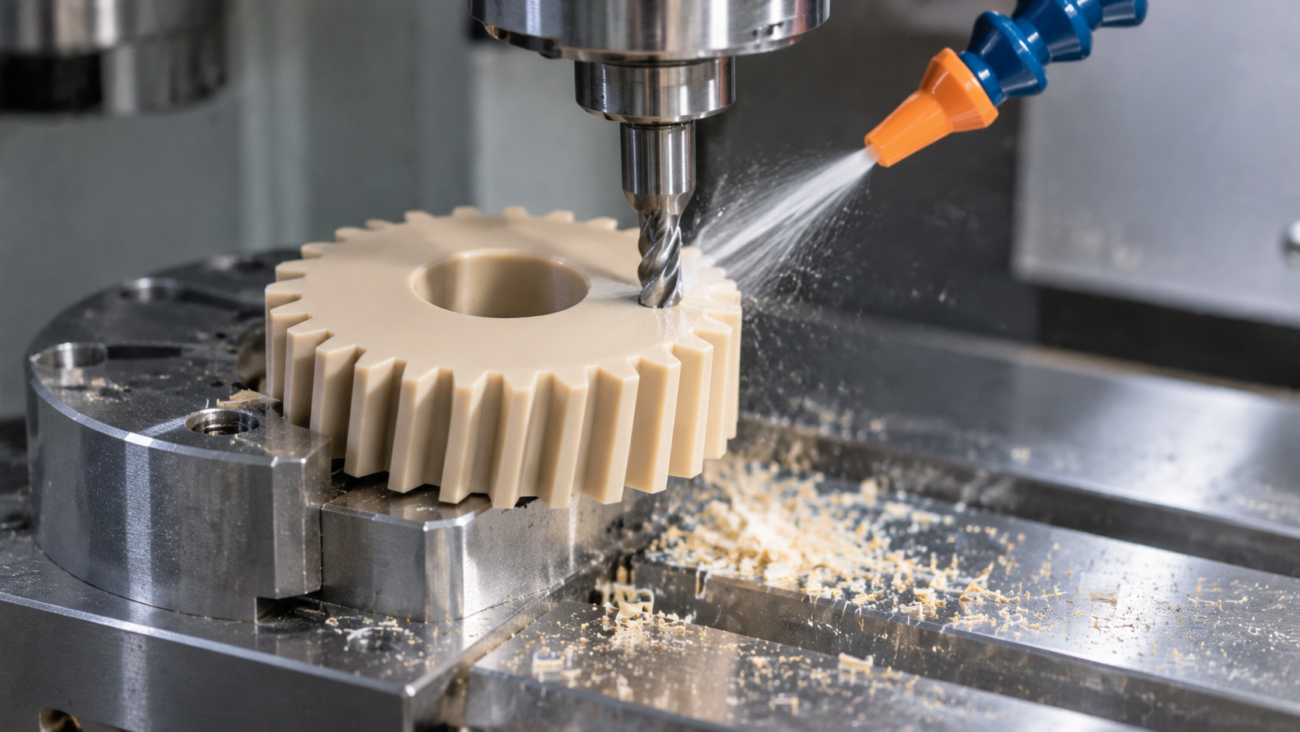
The combination of high-temperature resistance, chemical stability, and improved mechanical performance makes fiber-reinforced PEEK suitable for a wide range of industrial applications.
Aerospace Engineering
CF/PEEK composites are considered for lightweight structural components where high stiffness, strength-to-weight ratio, and thermal performance are important.
Automotive and New Energy Vehicles
Fiber-reinforced PEEK can be used in precision mechanical components, transmission systems, and selected high-temperature parts requiring reduced weight and improved mechanical stability.
Industrial Machinery
Reinforced PEEK grades are suitable for selected bearings, bushings, wear components, and structural parts operating under mechanical loads.
Semiconductor Equipment
Their dimensional stability, thermal resistance, and mechanical characteristics make selected reinforced PEEK grades relevant to precision equipment components. Electrical conductivity and contamination requirements must also be considered when choosing carbon fiber grades.
Medical Engineering
PEEK is used in various medical applications, but fiber-reinforced grades require application-specific evaluation. Medical-grade certification, biocompatibility, sterilization resistance, and regulatory requirements must be verified for the intended use.
6. Future Developments in Fiber-Reinforced PEEK
Research into reinforced PEEK continues to focus on improving composite performance, processing consistency, and manufacturing flexibility.
Several development directions are particularly important.
Advanced Continuous Fiber Composites
Continuous carbon fiber reinforced PEEK is attracting interest in high-performance structural applications. Improved fiber placement and consolidation techniques can help produce complex components with tailored mechanical properties.
Improved Fiber-Matrix Compatibility
Further developments in surface treatment, sizing technology, and interface engineering aim to improve stress transfer and reduce interfacial defects.
Advanced Manufacturing Processes
Automated fiber placement, compression molding, and additive manufacturing are expanding the possibilities for producing reinforced PEEK components with more complex geometries and controlled fiber arrangements.
Process and Quality Optimization
Better control of processing temperature, fiber orientation, crystallization, and cooling conditions is essential for achieving repeatable mechanical properties and dimensional accuracy.
These developments are expected to expand the application potential of fiber-reinforced PEEK across advanced engineering industries.
Conclusion: Choosing the Right Reinforced PEEK Grade
Fiber reinforcement provides an effective way to expand the performance capabilities of PEEK.
By introducing carbon or glass fibers into the polymer matrix, manufacturers can improve stiffness, mechanical strength, and resistance to deformation, making reinforced grades suitable for more demanding engineering applications.
However, selecting the right grade requires more than comparing fiber types.
Engineers should consider:
- Required tensile and flexural properties
- Operating temperature and mechanical loading
- Dimensional stability requirements
- Wear and friction conditions
- Electrical properties
- Manufacturing process and component geometry
Carbon fiber reinforced PEEK and glass fiber reinforced PEEK each offer distinct advantages. The right choice depends on the actual operating conditions and performance requirements of the component.
At PEICHINA, we supply high-performance PEEK materials in different formulations, including unfilled, carbon fiber reinforced, and glass fiber reinforced grades. We also support custom material selection, precision CNC machining, and injection molding solutions for industrial applications.
Contact our team to discuss your PEEK material requirements and find a suitable grade for your application.