Blog
PEEK Modification Methods: Types, Materials, Properties and Industrial Applications

Published by: PEICHINA Engineering & Technical Team
Category: High-Performance Plastics / Material Technology
Introduction: Why Modify PEEK?
Polyether Ether Ketone (PEEK) is a high-performance semi-crystalline thermoplastic widely used in aerospace, medical devices, semiconductor equipment, oil and gas systems, and precision industrial components.
Its combination of high mechanical strength, thermal stability, chemical resistance, and dimensional performance makes it a preferred alternative to metals and conventional engineering plastics in demanding operating environments.
However, standard unfilled PEEK does not meet every engineering requirement. Depending on the application, additional improvements in stiffness, wear resistance, electrical conductivity, thermal performance, or surface bioactivity may be necessary.
PEEK modification technologies address these requirements by adjusting the material composition, incorporating functional reinforcements, or changing the surface characteristics.
In general, PEEK modification can be divided into three major categories:
- Polymer Blending Modification
- Filler and Fiber Reinforcement
- Surface Modification Technologies
Understanding these methods helps engineers select the appropriate PEEK grade for specific operating conditions.
1. Polymer Blending Modification
Polymer blending involves combining PEEK with another polymer to modify its processing behavior or achieve a different balance of thermal, mechanical, and functional properties.
Rather than relying exclusively on the characteristics of pure PEEK, blending allows material developers to explore combinations of different polymer structures.
PEEK and Polyphenylene Sulfide (PPS)
PEEK/PPS blends have attracted interest because both materials offer excellent thermal and chemical resistance.
Depending on the blend composition, processing conditions, and phase compatibility, these combinations can modify crystallization behavior, melt processing characteristics, and mechanical performance.
However, PEEK and PPS do not automatically form a fully compatible system. Their final properties depend heavily on formulation and processing control.
PEEK and Polyethersulfone (PES)
PES can influence the crystallization behavior and thermal transitions of PEEK.
Research has shown that PEEK/PES blends may exhibit limited compatibility, with their morphology and mechanical properties strongly affected by blend ratios, processing temperatures, cooling rates, and compatibilizers.
This approach is mainly relevant to specialized polymer development rather than ordinary stock-shape production.
When Is Polymer Blending Used?
Polymer blending is generally considered when material developers need to:
- Adjust melt viscosity and processing characteristics.
- Modify crystallization behavior.
- Explore alternative thermal and mechanical property combinations.
- Develop specialized polymer systems for specific applications.
It is important to evaluate the compatibility of the blended polymers rather than assuming that combining two high-performance materials will automatically improve every property.
2. Filler and Fiber Reinforcement Modification
Filler reinforcement is one of the most established approaches for modifying PEEK.
By incorporating fibers, solid lubricants, conductive additives, or functional particles into the polymer matrix, manufacturers can tailor specific properties to meet engineering requirements.
Different reinforcement systems produce different performance characteristics.
2.1 Carbon Fiber Reinforced PEEK (CF-PEEK)
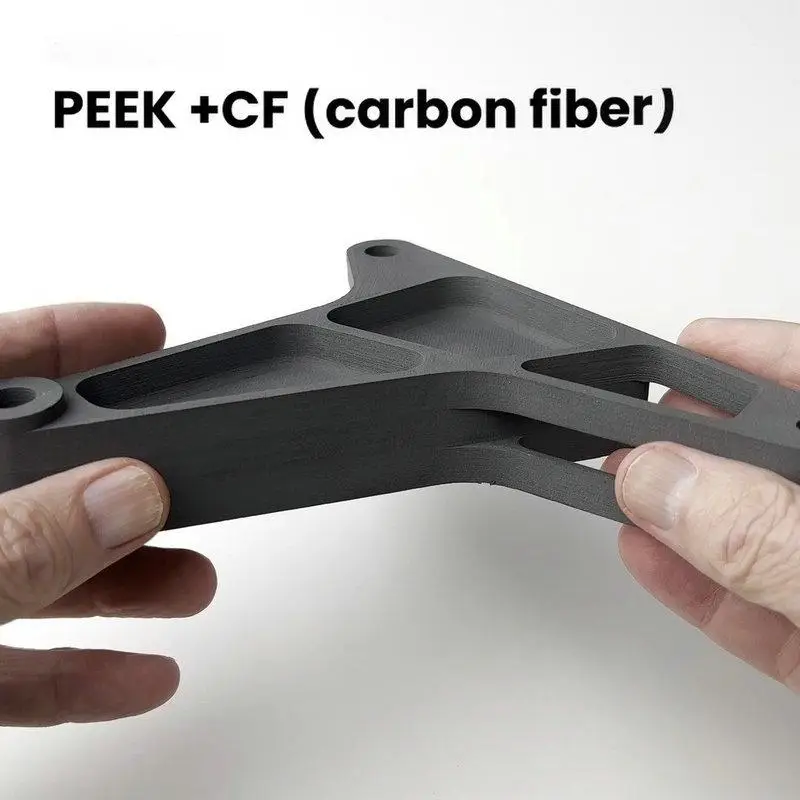
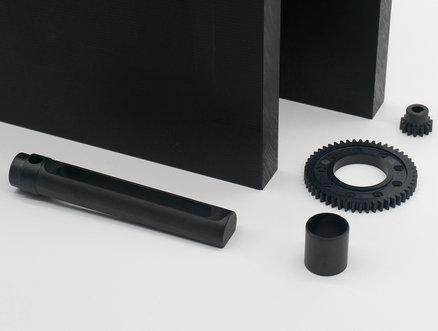
Carbon fiber reinforcement significantly increases the stiffness and strength-to-weight performance of PEEK.
Compared with unfilled PEEK, CF-PEEK generally offers:
- Higher tensile and flexural modulus.
- Improved dimensional stability under load.
- Reduced thermal expansion in the fiber direction.
- Better resistance to deformation in structural applications.
CF-PEEK is commonly considered for aerospace components, high-load mechanical parts, precision fixtures, and industrial structural components.
However, fiber orientation and loading direction can influence mechanical performance. Carbon fiber reinforcement may also increase anisotropy and reduce elongation at break.
2.2 Glass Fiber Reinforced PEEK (GF-PEEK)
Glass fiber reinforcement provides another effective way to increase the stiffness and dimensional stability of PEEK.
Its main advantages include:
- Increased flexural modulus.
- Improved dimensional stability.
- Reduced thermal expansion.
- Better resistance to deformation under mechanical loading.
GF-PEEK is suitable for structural components, electrical insulation parts, industrial fixtures, and precision mechanical applications.
Compared with carbon fiber grades, glass fiber grades are generally electrically insulating, making them useful where electrical insulation is required.
2.3 PTFE and Graphite Modified PEEK
For applications involving friction, sliding contact, and continuous mechanical movement, PEEK can be modified with solid lubricants such as PTFE and graphite.
These additives help reduce friction and improve wear behavior under suitable operating conditions.
Typical applications include:
- Bearings and bearing cages.
- Bushings and wear rings.
- Sliding components.
- Pump and compressor components.
- Mechanical sealing systems.
The final wear performance depends on the additive content, counterface material, surface finish, contact pressure, temperature, and lubrication conditions.
2.4 Electrically Conductive and Static-Dissipative PEEK
Electrical modification is particularly important in semiconductor manufacturing, electronics, and precision automation.
Conductive fillers such as carbon black, carbon fibers, and carbon nanotubes can be incorporated into PEEK to adjust its electrical resistance.
Depending on the formulation, the resulting material may provide:
- Electrical conductivity.
- Static charge dissipation.
- Reduced electrostatic accumulation.
- Electromagnetic shielding functionality.
It is essential to distinguish electrically conductive PEEK from static-dissipative PEEK. These are different electrical performance categories and should be selected according to the required surface or volume resistivity.
Typical applications include semiconductor handling components, wafer-processing fixtures, electronic equipment parts, and ESD protection components.
2.5 Functional Nanoparticle Reinforcement
Advanced PEEK formulations may also incorporate nanoparticles such as graphene, carbon nanotubes, metal oxides, and bioceramic particles.
Depending on particle type, concentration, dispersion, and interfacial bonding, these additives may improve selected functional properties.
Examples include:
- Carbon nanotubes: Electrical conductivity and electromagnetic shielding.
- Graphene: Electrical, thermal, and mechanical property modification.
- Metal oxide particles: Tailored thermal, tribological, or other functional characteristics.
- Hydroxyapatite: Improved surface bioactivity for selected biomedical applications.
However, nanoparticle reinforcement requires careful control of dispersion and interfacial compatibility. Higher filler content does not necessarily produce better overall performance.
3. PEEK Surface Modification Technologies
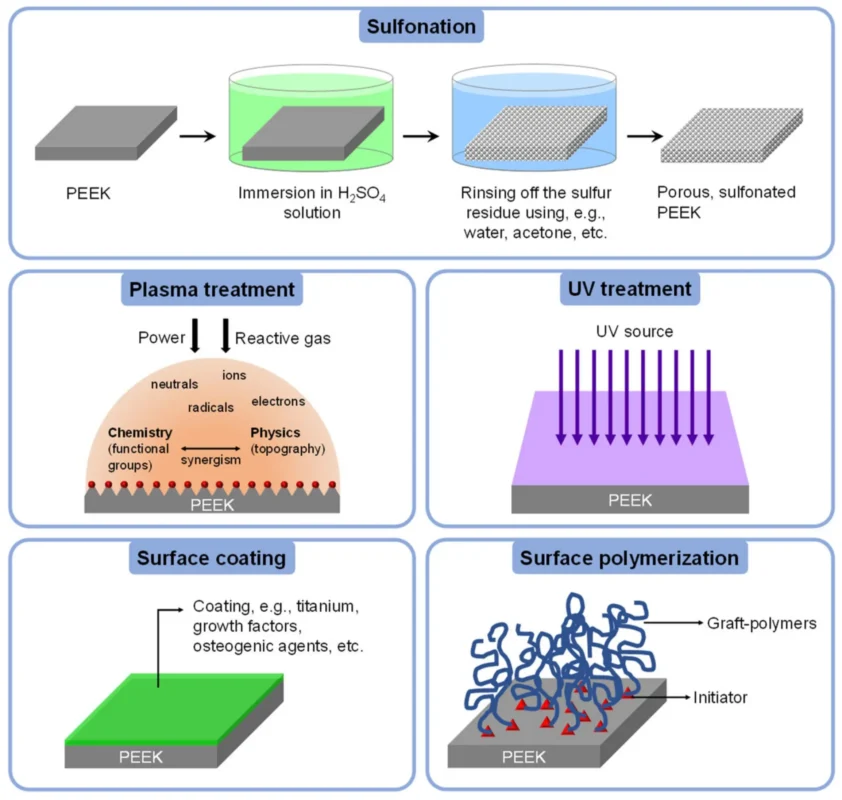
Unlike bulk modification, surface modification focuses on changing the outer layer of PEEK without necessarily altering the properties of the entire material.
This is particularly useful when the original mechanical and thermal characteristics need to be maintained while introducing additional surface functionality.
3.1 Plasma Treatment
Plasma treatment uses ionized gases to modify the chemical composition and surface energy of PEEK.
It can introduce polar functional groups and improve surface wettability.
Potential benefits include:
- Improved surface adhesion.
- Better wettability.
- Enhanced bonding with coatings and adhesives.
- Improved suitability for selected biomedical surface treatments.
Plasma treatment is commonly investigated in medical implants, surface coating, and advanced bonding applications.
3.2 Sulfonation Treatment
Sulfonation is a chemical surface modification method that typically uses concentrated sulfuric acid under controlled conditions.
It creates a porous surface structure and introduces sulfonic functional groups, changing the surface morphology and wettability of PEEK.
This technique has attracted considerable interest in biomedical applications because it can improve surface hydrophilicity and support subsequent bioactive functionalization.
However, treatment concentration, exposure time, neutralization, and rinsing must be carefully controlled to avoid unwanted surface damage or residual chemicals.
3.3 Laser Surface Treatment
Laser processing can modify the surface texture and geometry of PEEK with high precision.
Depending on laser type and processing parameters, it can produce:
- Micro-grooves and surface patterns.
- Increased surface roughness.
- Localized surface texturing.
- Improved mechanical interlocking for selected bonding applications.
Laser surface treatment is particularly relevant to medical implants, precision bonding, and specialized industrial components.
Excessive laser energy may cause thermal degradation or surface carbonization, so processing parameters must be optimized.
3.4 Surface Coating and Functionalization
PEEK surfaces can also be modified by applying functional coatings or depositing other materials.
Examples include titanium coatings and hydroxyapatite-based coatings for selected biomedical applications.
These treatments aim to introduce surface properties that are not naturally provided by unmodified PEEK, such as improved bioactivity, bonding characteristics, or specialized surface functionality.
The coating process must be evaluated for adhesion strength, durability, and compatibility with the intended operating environment.
4. How to Select the Right Modified PEEK Grade
Different modification technologies solve different engineering problems. Selecting the correct grade requires understanding the actual operating conditions rather than simply choosing the material with the highest mechanical strength.
| Engineering Requirement | Recommended PEEK Modification |
|---|---|
| Higher stiffness and structural strength | Carbon Fiber Reinforced PEEK |
| Dimensional stability and electrical insulation | Glass Fiber Reinforced PEEK |
| Reduced friction and improved wear resistance | PTFE / Graphite Modified PEEK |
| Static charge dissipation | Static-Dissipative PEEK |
| Electrical conductivity | Conductive PEEK |
| Improved surface adhesion | Plasma or Surface Treatment |
| Enhanced biomedical surface functionality | Sulfonation / Bioactive Coating |
Important: These are general material-selection guidelines. Actual performance should be confirmed against the specific grade’s technical data, test methods, and operating conditions.
Conclusion: Modified PEEK Expands Engineering Possibilities
PEEK modification technologies allow engineers to tailor material performance beyond the capabilities of standard unfilled PEEK.
Polymer blending provides opportunities to adjust polymer behavior, fiber and filler reinforcement improves selected bulk properties, and surface modification introduces additional functionality at the material interface.
The most suitable solution depends on the balance between mechanical loading, operating temperature, friction, electrical requirements, chemical exposure, and dimensional tolerances.
For engineers and manufacturers, understanding these differences is essential to selecting the right PEEK material and achieving reliable component performance.
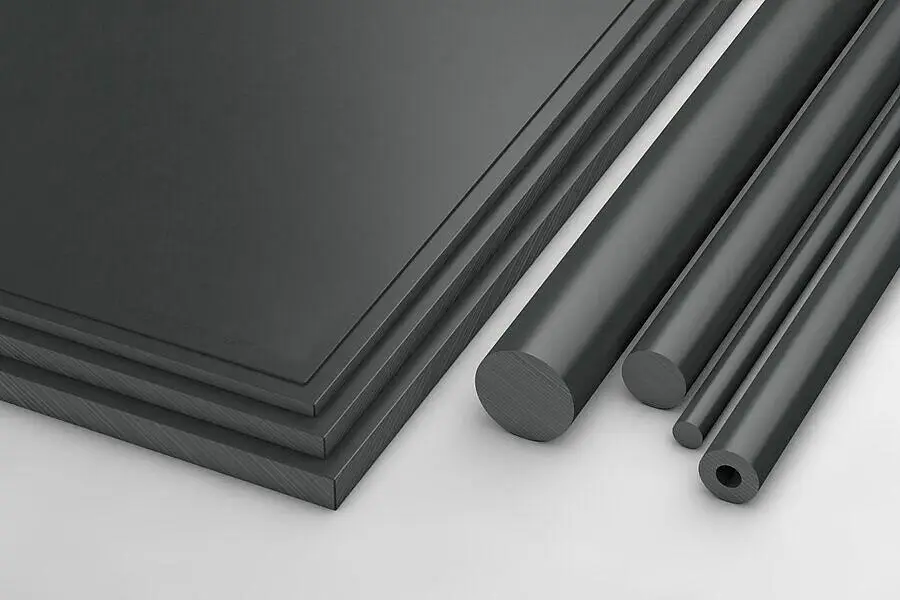
At PEICHINA, we supply engineering plastic sheets and rods, including PEEK and modified PEEK grades, with custom cut-to-size and precision CNC machining services based on customer drawings.
Contact our team to discuss your PEEK material requirements and application specifications.