
Blog
High-Performance PEEK Seals: Material Properties, Engineering Uses, and Critical Industrial Applications

In severe operating environments, standard elastomeric O-rings and general-purpose polymer seals frequently fail. High operating pressures cause material extrusion, elevated temperatures degrade mechanical integrity, and aggressive process fluids lead to rapid chemical breakdown.
For design engineers and plant operators, sealing failure means unscheduled downtime, environmental hazards, and costly maintenance.
Polyether Ether Ketone (PEEK) has established itself as the premier engineering thermoplastic for critical dynamic and static sealing systems. Offering an unmatched balance of tensile strength, thermal resistance up to 260°C (500°F), and exceptional resistance to creep and extrusion, PEEK components reliably replace both fluoropolymers and metals in harsh industrial applications.
This comprehensive guide details the material properties of PEEK seals, compares them against PTFE, explores filled material grades, and examines their use in high-demand industries.
1. What Makes PEEK the Superior Polymer for Sealing?
PEEK is a semi-crystalline, high-performance member of the Polyaryletherketone (PAEK) family. Unlike standard engineering plastics like POM (Acetal) or Nylon, PEEK retains its structural rigidity, dimensional precision, and chemical inertness under sustained mechanical loads at extreme temperatures.
Key Material Properties for Sealing Performance:
- Superior Anti-Extrusion & Creep Resistance: The primary reason engineers specify PEEK over softer polymers is its high flexural modulus and resistance to “cold flow.” Under dynamic pressure spikes, PEEK retains its shape rather than extruding into clearance gaps.
- Continuous Thermal Stability: PEEK maintains a high continuous service temperature of 250°C–260°C (480°F–500°F) and exhibits a glass transition temperature (
TgTg) of approximately 143°C (289°F). - Broad Chemical Compatibility: PEEK demonstrates virtually zero degradation when exposed to hydrogen sulfide (
H2SH2S), carbon dioxide (CO2CO2), industrial solvents, hydrocarbons, high-pressure steam, and aggressive acids. - Low Tribological Wear & Friction: With an exceptionally low specific wear rate, PEEK generates minimal particulate debris during continuous sliding contact, ensuring seal longevity in unlubricated or high-speed rotary assemblies.
- Negligible Moisture Absorption: With a 24-hour water absorption rate under 0.1%, PEEK components resist swelling and dimensional variance in submerged fluid-handling equipment.
2. Common Types of PEEK Sealing Components
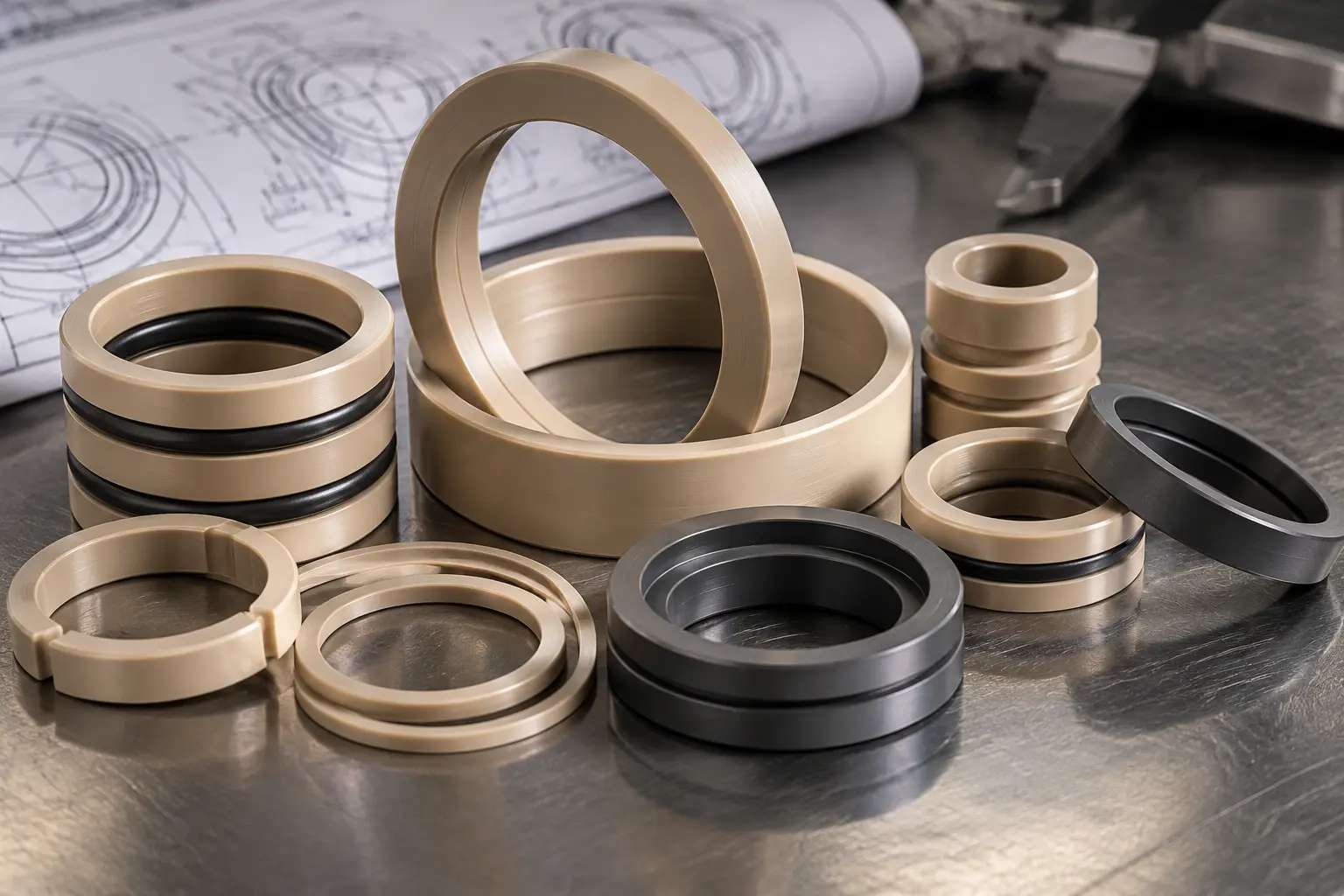
Thanks to its excellent machinability and structural rigidity, PEEK is precision-machined into various dynamic, static, and rotary sealing profiles:
- Anti-Extrusion Backup Rings: Installed adjacent to elastomeric O-rings to prevent the elastomer from deforming into high-pressure gap clearances.
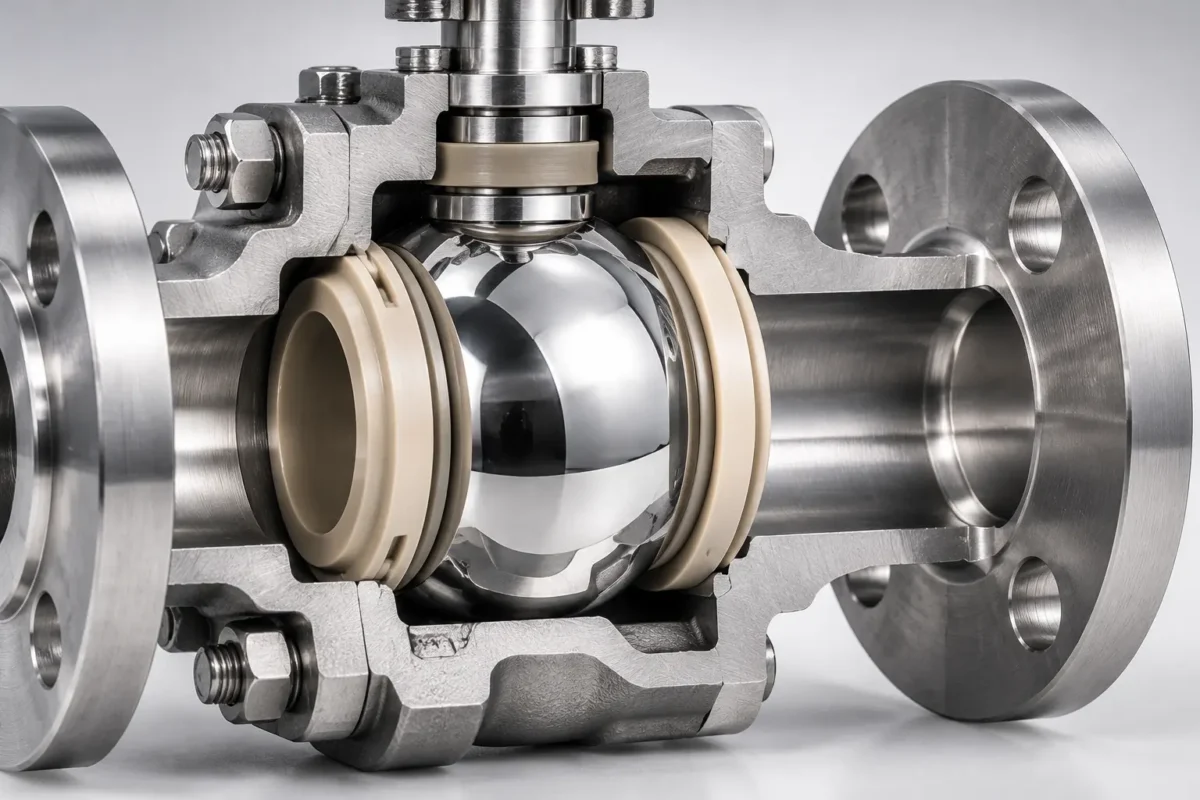
- Valve Seats & Stem Seals: Critical components in ball valves, plug valves, and control valves operating in high-temperature or corrosive media.
- Compressor & Pump Valve Plates: Used in reciprocating gas compressors where high impact fatigue resistance and rapid cyclic response are mandatory.
- Spring-Energized Seal Jackets: Combined with internal metal springs to provide leak-tight sealing in cryogenic or fluctuating thermal systems.
- Dynamic Rotary & Labyrinth Seals: Serving as non-contacting or low-friction sealing barriers in high-RPM turbomachinery.
- Wear Rings & Guide Bushings: Dual-action components that act as both bearing surfaces and debris-exclusion seals in hydraulic cylinders.
3. PEEK vs. PTFE: How to Choose the Right Sealing Material
While PTFE (Teflon™) and PEEK are both industry-standard high-performance polymers, their mechanical behavior differs fundamentally under load:
| Engineering Property | PEEK (Virgin) | PTFE (Virgin) | Engineering Impact |
| Tensile Strength | 90 – 100+ MPa | 20 – 35 MPa | PEEK handles 3x–4x higher mechanical load. |
| Compressive Strength | High (>110 MPa) | Moderate (~10–15 MPa) | PEEK will not deform or crush under bolt torques. |
| Creep / Extrusion Resistance | Outstanding | Poor (Susceptible to Cold Flow) | PTFE cold flows under load; PEEK maintains gap tolerance. |
| Friction Coefficient | Moderate (~0.30–0.40) | Ultra-Low (~0.05–0.10) | PTFE is preferred for dry, ultra-low friction needs. |
| Operating Pressure Limit | Extremely High (>10,000+ PSI) | Low to Moderate | PEEK is mandatory for HP/HT downhole or hydraulic systems. |
| Machining Tolerances | Tight (ISO DIN 2768 Fine) | Moderate (Subject to stress relaxation) | PEEK produces burr-free, high-precision geometry. |
Engineering Takeaway: Use PTFE when your design demands the absolute lowest dynamic friction or cryogenic flexibility. Upgrade to PEEK when high pressure, mechanical extrusion, sliding wear, or high load-bearing capability causes softer seals to fail prematurely.
4. Selecting the Right PEEK Grade for Sealing Applications
To optimize sealing performance, PEEK can be compounded with various reinforcements:
- Virgin PEEK (Unfilled):
- Best for: High-purity semiconductor environments, FDA-compliant food contact, analytical instruments, and medical devices. Provides the highest ductility and impact resistance.
- 30% Glass-Filled PEEK (GF30):
- Best for: High-load static seals and thermal barriers. Glass fibers dramatically improve compressive modulus and lower the coefficient of thermal expansion (CTE).
- 30% Carbon-Fiber-Reinforced PEEK (CF30):
- Best for: Downhole pump seals and aerospace components requiring maximum stiffness, highest fatigue strength, and weight reduction compared to titanium or stainless steel.
- Bearing/Tribological Grade (PEEK-FC30 / HPV):
- Compounded with: Carbon fiber, PTFE, and graphite.
- Best for: High-speed dynamic rotary seals, dry-running bushings, and compressor piston rings where continuous lubrication is absent.
5. Critical Industry Applications
Oil & Gas (HP/HT Environments)
Downhole exploration, subsea trees, and fracturing pumps expose seals to sour gas (H2SH2S), extreme pressures exceeding 15,000 PSI, and bottom-hole temperatures above 200°C. PEEK backup rings and valve seats prevent blowouts and maintain pressure integrity where elastomers fail.
Semiconductor & Vacuum Systems
Wafer processing, dry etching, and CMP operations require zero contamination. Virgin PEEK delivers extremely low outgassing, high plasma resistance, and minimal particle shedding, ensuring ultra-clean vacuum chamber seals and chemical distribution manifolds.
Analytical & Laboratory Equipment
High-Performance Liquid Chromatography (HPLC) valves, injection ports, and fluid metering devices demand micro-inch sealing tolerances under chemical contact. PEEK fluid connectors and rotor seals ensure leak-free analytical accuracy across aggressive mobile phases.
Aerospace & Defense
From flight control hydraulic actuators to fuel metering valves, PEEK seals deliver substantial weight savings over bronze and steel while offering non-flammable, radiation-resistant, and vibration-dampening performance.
6. Precision Machining vs. Molding for PEEK Seals
Depending on volume and geometry requirements, PEEK sealing components are produced via two main routes:
- CNC Precision Machining:
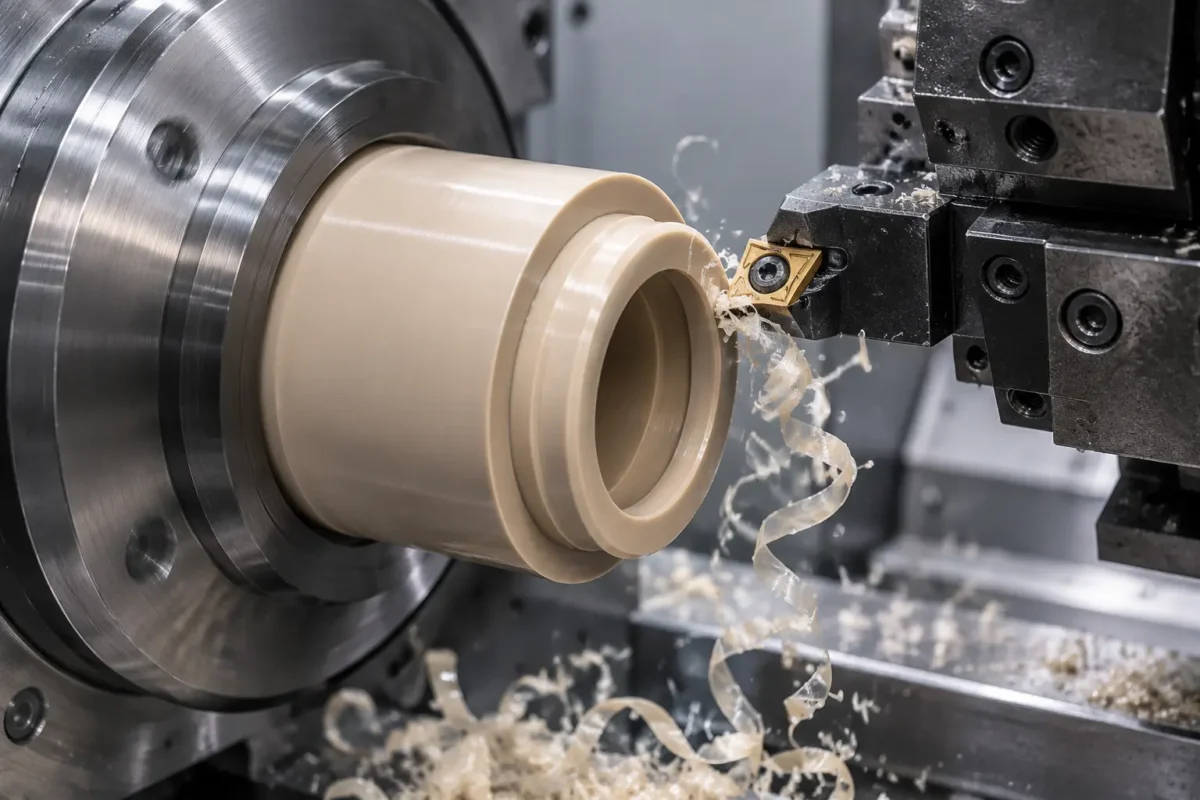
Ideal for custom cross-sections, tight tolerances (down to±±0.01 mm), rapid prototyping, and medium production runs. Utilizing annealed PEEK rods and tubes eliminates internal stress and prevents post-machining dimensional drift. - Injection Molding & Compression Molding:
Cost-effective for high-volume standard O-rings, backup rings, and complex multi-cavity geometries with minimal material scrap.
Summary & Sourcing High-Quality PEEK Seals
PEEK is not merely an alternative plastic—it is an engineered problem-solver for the most demanding sealing challenges in modern industry. By resisting extrusion, withstanding aggressive chemicals, and maintaining dimensional stability across a wide temperature spectrum, PEEK sealing rings and custom components consistently lower total cost of ownership by extending equipment maintenance intervals.
Need Custom PEEK Sealing Components or Stock Shapes?
Whether you need custom CNC-machined PEEK backup rings, valve seats from drawings, or standard PEEK rods and cut-to-size blanks, choosing the right material quality is essential.
- Material Options: Virgin PEEK, 30% Carbon Filled, 30% Glass Filled, Bearing Grade (HPV).
- Direct Factory Supply: Full material test certificates (MTC), dimensional inspection reports, and fast worldwide DDP shipping (5–9 days to door).
- Get Started: Send your 2D/3D CAD drawings or dimensions today for a prompt, competitive quotation.