
Blog
Metal vs. PEEK: Why High-Performance Polymers Are Replacing Traditional Metals

The Shifting Manufacturing Landscape
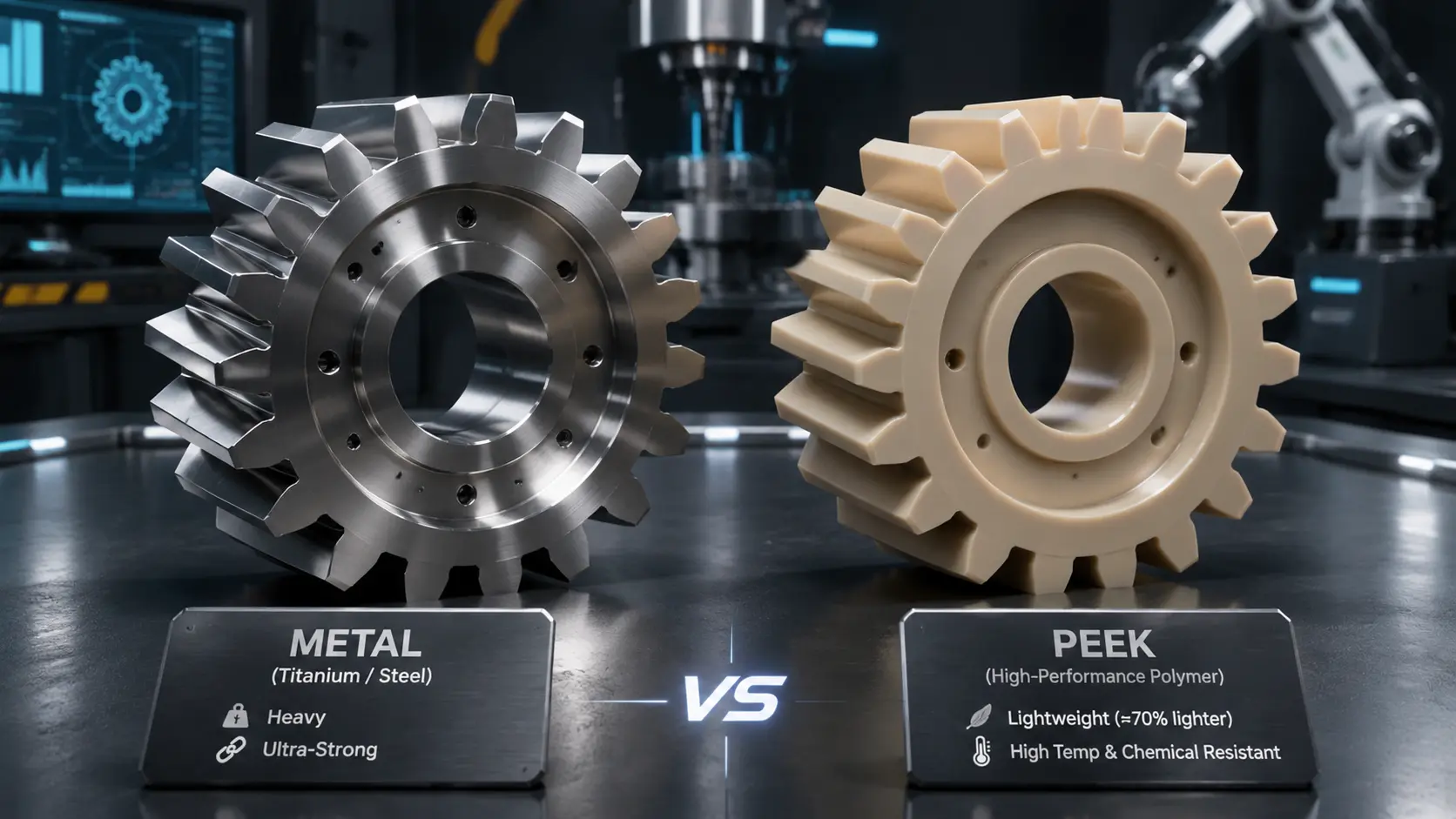
Global manufacturing is undergoing a massive transformation. Driven by the demand for miniaturization, lightweight components, and the need to operate in harsh environments, industries are rapidly shifting away from traditional metals. The material leading this revolution? High-Performance Polymers (HPP), specifically PEEK (Polyether ether ketone).
The Problem with Metal: The “Buy-to-Fly” Dilemma
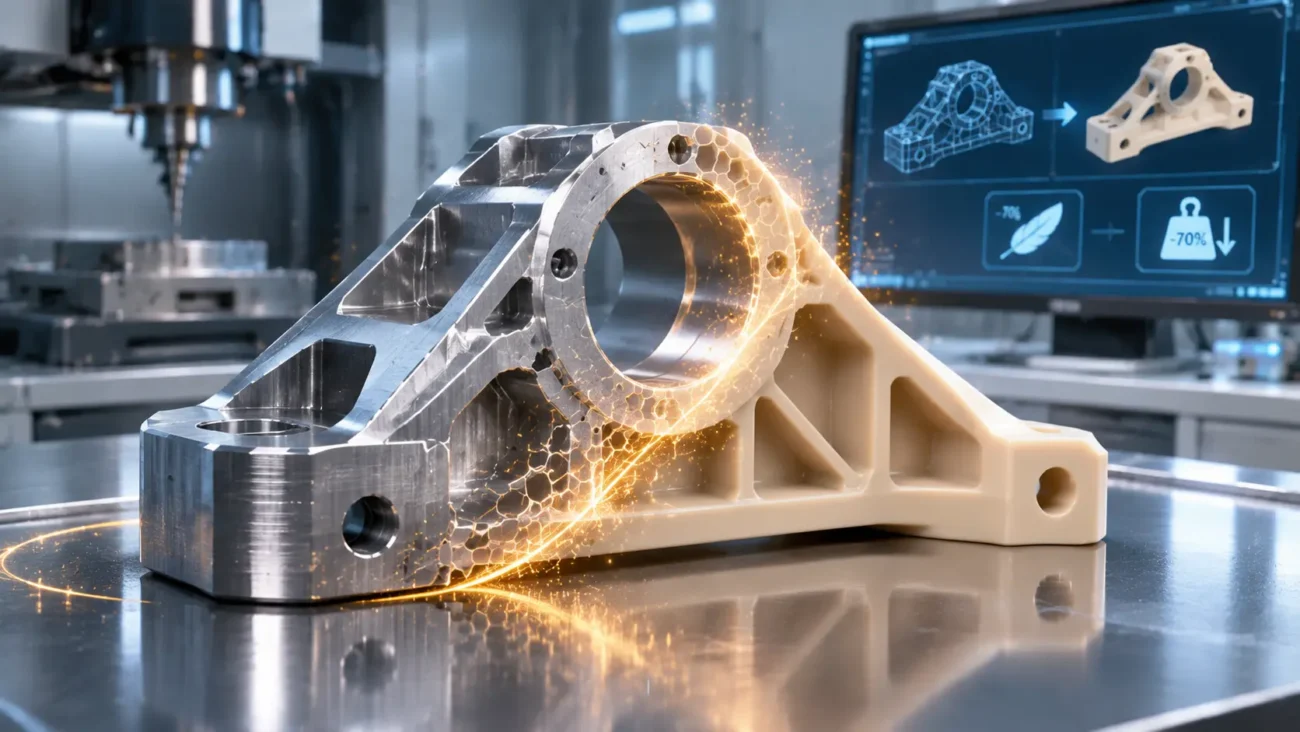
For centuries, metals were the only option for functional, durable parts. However, manufacturing metal components requires multi-stage machining processes that generate significant material waste.
In the aerospace industry, this inefficiency is measured by the “buy-to-fly ratio”—the ratio of the weight of raw material purchased to the weight of the final part. Traditional metal alloys like aluminum and titanium suffer from alarmingly high buy-to-fly ratios. Even though aluminum can be recycled, the energy and inefficiency involved in the primary and secondary machining processes make it less sustainable than modern polymer alternatives.
How Polymers Break Design Boundaries
Unlike metals, polymers allow engineers to push the limits of complex design while remaining highly functional and cost-effective. Specifically, thermoplastic polymers like PEEK can be melted and reshaped without any loss of mechanical properties, resulting in near-zero material waste during injection molding or high-efficiency CNC machining.
The Massive Market Gap for Metal Replacement
Despite the obvious advantages, the transition is still in its infancy. Based on industry data from researchers like Geyer, Jambeck, and Law:
- Global general polymer production exceeds 400 million metric tons.
- The demand for typical metals (aluminum, steel, titanium, brass) is roughly four times that of total polymer consumption.
- Currently, only about 20% of the potential metal-replacement opportunities have been realized.
This indicates a massive, untapped market for replacing metal components with high-performance polymers in the foreseeable future.
What Makes PEEK the Ultimate Choice?
Polymers are generally classified into three tiers based on temperature resistance and mechanical properties: General, Engineering, and High-Performance Polymers (HPP).
PEEK sits at the absolute top of this material pyramid. Belonging to the PAEK (PolyArylEtherKetone) family, PEEK is a dynamic driving force for highly demanding applications. Brands like VICTREX™ have proven that PEEK can easily outperform metals in extreme conditions.
Small Volume, Massive Impact
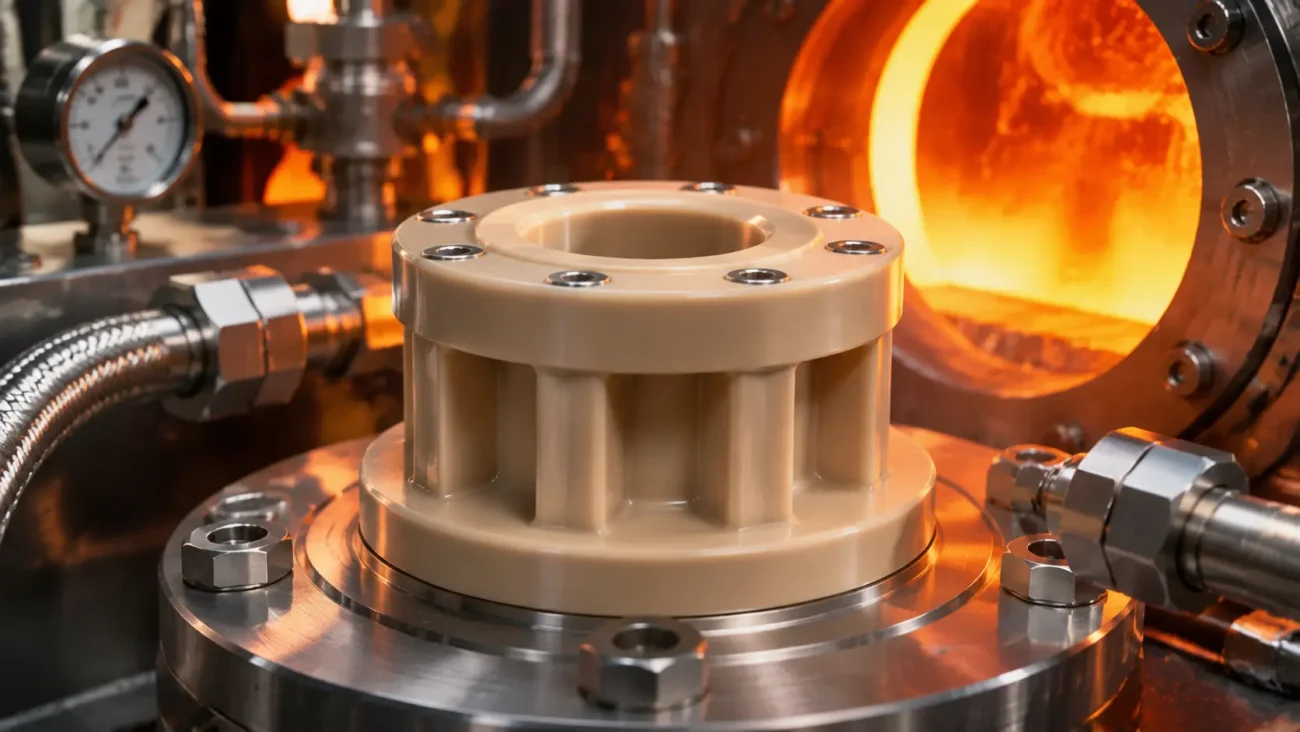
While the total production of HPPs is around 700,000 metric tons (with the PAEK family accounting for just a fraction at 6,000 metric tons), PEEK punches far above its weight class. When applications demand extreme resistance to high temperatures, high pressures, and corrosive chemical environments, PEEK is no longer just an alternative to metal—it is the material of choice.